When Walter B. Cannon coined the term “fight or flight” in 1933 to describe stress behaviours, he likely didn’t consider that males and females might respond differently to stressful events. It took almost 70 years for the scientific community to recognise that females of all species respond differently to stress than males.
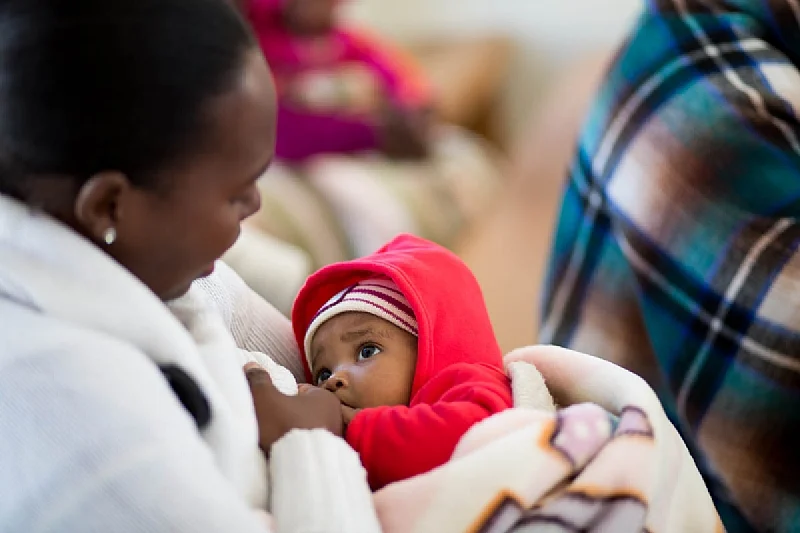
Since 2000, when UCLA psychology professor Shelley Taylor coined the term “tend and befriend” to describe female behavioural responses to stress, numerous studies have supported her hypothesis that females, when stressed, “tend”—take care of their young—and “befriend”—connect to others. It’s not that females don’t have a fight-or-flight response, just that their default response is rather to take care of and connect with others.
Think of your cat with kittens or your dog with puppies. When approached by strangers, they will quickly gather up their young by the scruffs of their necks and carry them to a safe hiding place. Hundreds of internet reels show mothers of many species doing the same. Female mice or rats cuddle in the corner of their cages when perceiving a threat. Human studies show that after a stressful workday or stressful situation, men are more likely to withdraw while women are more likely to care for their children and families.
Many factors contribute to this difference, including genetic, hormonal, social, and environmental. Generally, estrogens increase and androgens (male sex hormones) decrease stress hormone responses. Different stressors also differentially affect sex hormone release, with acute social stress increasing testosterone in males and chronic stress diminishing it. Similarly, chronic stress suppresses estrogen in females and can impair the menstrual cycle.
Female rodents release more stress hormones and neurotransmitters than males when confronted with a stressor. These include the brain’s stress hormone, corticotropin-releasing factor (CRF), the stress hormone cortisol, and the neurotransmitter serotonin.
Not only are stress hormone levels higher in females than in males, but the receptors that bind these hormones differ as well. Of the two types of CRF receptors (CRF1 and CRF2), female rats express more CRF1, while male rats express more CRF2. Why is this important? It turns out that CRF1 activates the beginning of the stress response, while CRF2 ends it.
This could lead to increased anxiety in females and faster resolution of the stress response in males. Indeed, rates of illnesses associated with CRF dysregulation, such as posttraumatic stress, anxiety disorders, and major depression, are higher in women than men, suggesting that these CRF differences could predispose females to greater stress sensitivity than males.
Of course, not all females have such responses. When I studied a strain of female arthritis-prone rats with very low hormonal stress responses compared to their arthritis-resistant, high-stress-hormone female cousins, I found that they also had differences in their behavioural responses to stress. The low-stress-hormone rats simply curled up and went to sleep when stressed, while the high-stress-hormone rats reacted very skittishly.
When the low-stress pups were raised by high-stress rat moms, and vice versa, we found that genetic, environmental, and sex differences all contributed to these differences. The low-stress pups raised by high-stress dams had higher stress responses compared to their low-stress siblings, but not as high as their high-stress cousins raised by high-stress moms. And the differences were more apparent in the male pups than in their sisters.
Taylor based the “tend and befriend” hypothesis in part on the evolutionary benefits of differences in response to threats. The hormone oxytocin likely contributes to these behavioural differences. While oxytocin’s primary role is the start of labour and delivery and milk let down in nursing mothers, it is also important in pair-bonding, not only between mother and offspring but also between adult animals. Thus, the same hormone that is essential for birthing and nurturing of young also enhances social connectedness. And social connectedness is an important stress reducer.
Genetic studies in fruit flies also show that males and females differ in their behavioural responses to confrontation. Harvard professor Edward Kravitz noticed that male fruit flies placed on a cork under a microscope, when confronted with another male over a female, appear to fence and box, rising up on their hind legs and lunging, or boxing each other. (Check out the Fighting Fruit Flies Club on the internet!) The male who lunges first generally wins, eventually pushing the nondominant male off the cork to his death. In contrast, when two female fruit flies confront each other over a bit of food, they butt heads a couple of times, then share the food.
Kravitz and his team were able to change these behaviours by manipulating the flies’ genes and could turn female into male behaviours by masculinising the females, and vice versa.
What are the practical implications of all this? Knowing that stress responses differ in males and females and exactly how they differ biochemically can help identify more precise ways to treat stress-related conditions. Thus, while initial clinical studies of the treatment of depression with a CRF1 antagonist were disappointing, those studies were carried out only in human males or where male and female responses could not be teased apart. Repeating those studies with attention to how males and females respond differently to stress might lead to the discovery of a new and effective antidepressant.
Enhancing the “tend and befriend” response could provide new ways to treat anxiety disorders. Very few studies have explored the efficacy of oxytocin in anxiety disorders, and none have distinguished between male and female responses. Behavioural therapies, such as mindfulness meditation, which increases social connectedness, could also be effective, but without attention to sex differences in stress responsiveness, such studies may continue to remain inconclusive. Precision medicine requires that sex differences in stress responsiveness and stress response systems always be taken into account.