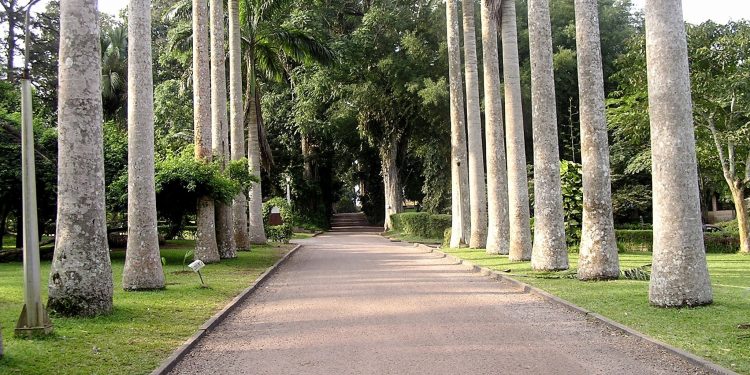
On a sunny Saturday in May 2025, I set out with high hopes for a refreshing and stress-relieving getaway at the Aburi Botanical Gardens.
Like many visitors, I looked forward to soaking in the serene beauty of Ghana’s most visited tourist site, nestled in the Eastern Region’s Akuapem South Municipality.
What was meant to be a relaxing day with friends turned into a disappointing reminder of how neglect threatens the potential of one of Ghana’s most iconic tourist attractions.
Located just 36 kilometres from Accra, a supposed 32-minute drive turned out to be a 3-hour drive due to heavy traffic on the route. Aburi is known for its lush greenery, cooler climate, and scenic views.
The Aburi Botanical Gardens has become synonymous with the town, putting it firmly on the tourism map.
In 2022, the gardens made history by overtaking Kakum National Park as the most visited tourist site in Ghana, attracting 186,109 visitors, up from just 27,887 in 2018 and 42,706 in 2021, according to data from the Ghana Tourism Authority (GTA).
However, behind the greenery and beauty lies a growing concern: deteriorating infrastructure, lack of proper maintenance, and inadequate visitor services.
Frustration Begins at the Gate
My friends and I paid the entrance fee, fair enough, considering the need to generate revenue. But as we made our way into the gardens, the cracks began to show. Seating was a major issue. Once-iconic features like the “Lovers’ Benches” were either missing or in a deteriorated state. With nowhere to sit, we were forced to rent tables and chairs.
What followed was even more frustrating: there was no standardised pricing. Three different vendors quoted GHC 70, GHC 60, and GHC 50 respectively for the same type of foldable table, while plastic chairs were going for GHC 5 each. This lack of regulation creates room for exploitation and leaves tourists confused.
We eventually settled into the garden, only to be approached by another vendor demanding an additional GHC 100 as a “garden fee.” With hundreds of visitors around, it was clear a lot of money was being collected but where was it all going?
A Garden in Decline
A stroll through the garden revealed more problems. I visited a restaurant called Garden View, one of only two eateries on-site, both of which had limited seating capacity (around 60 people). For such a popular tourist site, this is woefully inadequate.
The state of the restrooms was especially concerning. The facilities were unhygienic, taps were not flowing, and there was a persistent bad odour. Worse, the limited number of restrooms could not accommodate the large crowds, leading some visitors to resort to relieving themselves in nearby bushes an unfortunate and inappropriate outcome in a protected botanical space.
Some trees in the garden appeared old and weak, yet there seemed to be little effort to monitor or maintain them. Residents and traders I spoke to expressed worry, citing incidents where trees had fallen during storms. Thankfully, these often happen at night when visitors are not present but this raises a major safety concern.
A local egg seller expressed her frustration:
“They charge a lot of money from tourists but don’t use it for maintenance. Look at how old the trees are. When there’s heavy rain at night, trees fall. Thank God it mostly happens in the evenings.”
Another resident, Nana Kwame, lamented the poor infrastructure.
“There are no chairs, the washrooms are in terrible condition, and there’s no investment in new activities for tourists. They charge high gate fees, sometimes GHC 50 but you can’t see any improvements. The walls are fading, and the grass is overgrown.”
I also observed unauthorised use of the garden by residents as a shortcut to nearby areas. This contributes to the degradation of the environment and undermines conservation efforts.
What Can Be Done?
The Aburi Botanical Gardens holds immense potential not only as a tourist destination but also as a job-creating and revenue-generating asset. But this potential is being squandered due to poor management and lack of investment.
Here are some critical steps that should be taken:
Standardised Pricing:
The Ministry of Tourism and the Ghana Tourism Authority should ensure fixed and transparent pricing for rentals, gate fees, and other services to prevent exploitation and confusion.
Infrastructure Overhaul:
Invest in restoring benches, washrooms, restaurants, and basic amenities. Safety checks on trees and regular maintenance must be enforced.
Privatisation & Public-Private Partnerships (PPP): The Aburi Botanical Gardens is a prime candidate for privatisation or a PPP model. Private investors, working with the Ministry of Local Government and the GTA, could help revitalise the gardens while complying with PPP laws.
Security and Conservation Measures:
The government should enforce laws to prevent encroachment and unauthorised use of the gardens. More security personnel and proper fencing would help preserve the integrity of the site.
Innovation & Engagement:
Introduce fun, educational, and eco-friendly activities to make the space more engaging. Think walking tours, art exhibitions, kids’ play areas, or local craft markets.
A Call to Action
The Aburi Botanical Gardens is a national treasure but if left to deteriorate, we risk losing not just its beauty, but also its economic and historical value. We call on the Ministry of Tourism, Arts and Culture, the Ghana Tourism Authority, and the Akuapem South Municipal Assembly to act swiftly. Redevelop the gardens, standardise fees, enforce maintenance, and engage private partnerships to give this cherished site the facelift it urgently needs.
Let us preserve Aburi not just for ourselves, but for future generations of Ghanaians and tourists from around the world.