


Ghana’s tertiary hostel fee dilemma
In Ghana’s tertiary institutions, the weight of a degree doesn’t just rest on textbooks; it also rests on the price of a mattress.
Across campuses, students are grappling with hostel fees that now rival, or even exceed, tuition. For many Ghanaian students, the cost of accommodation now rivals the cost of education itself.
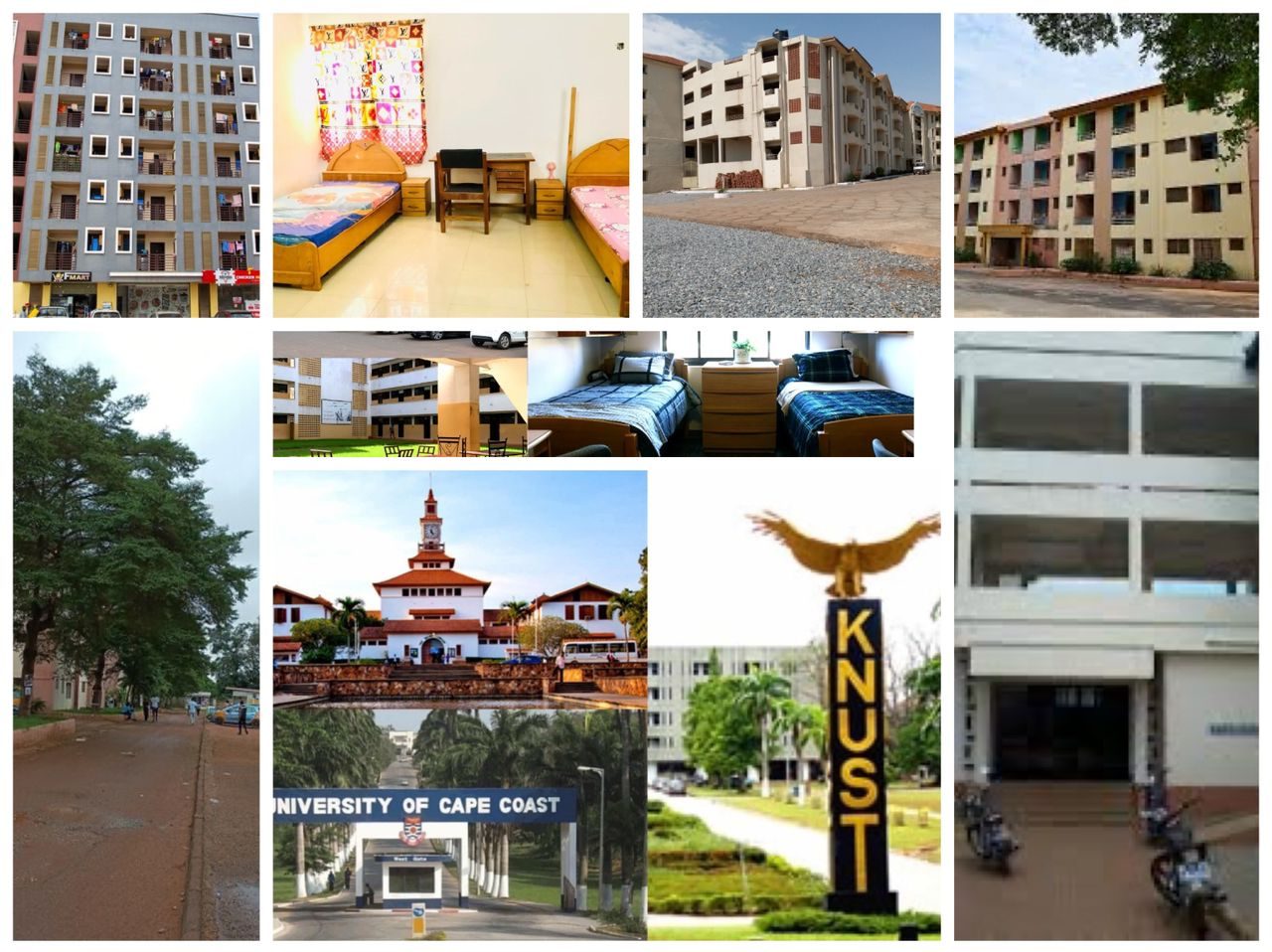
At the centre of this financial storm are prestigious hostels at the University of Ghana and upscale Class-A options near Kwame Nkrumah University of Science and Technology (KNUST).
University of Ghana: Pentagon, Bani & Evandy hostels
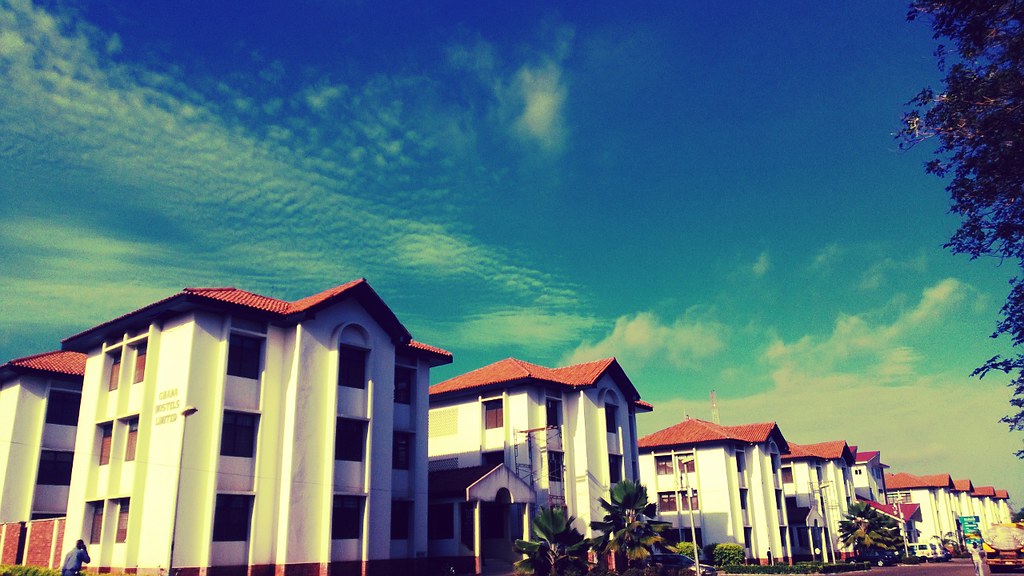
Managed by Ghana Hostels Limited, Pentagon Hostel (African Union Hall) sits on top of many students’ wishlists, but at a steep cost.
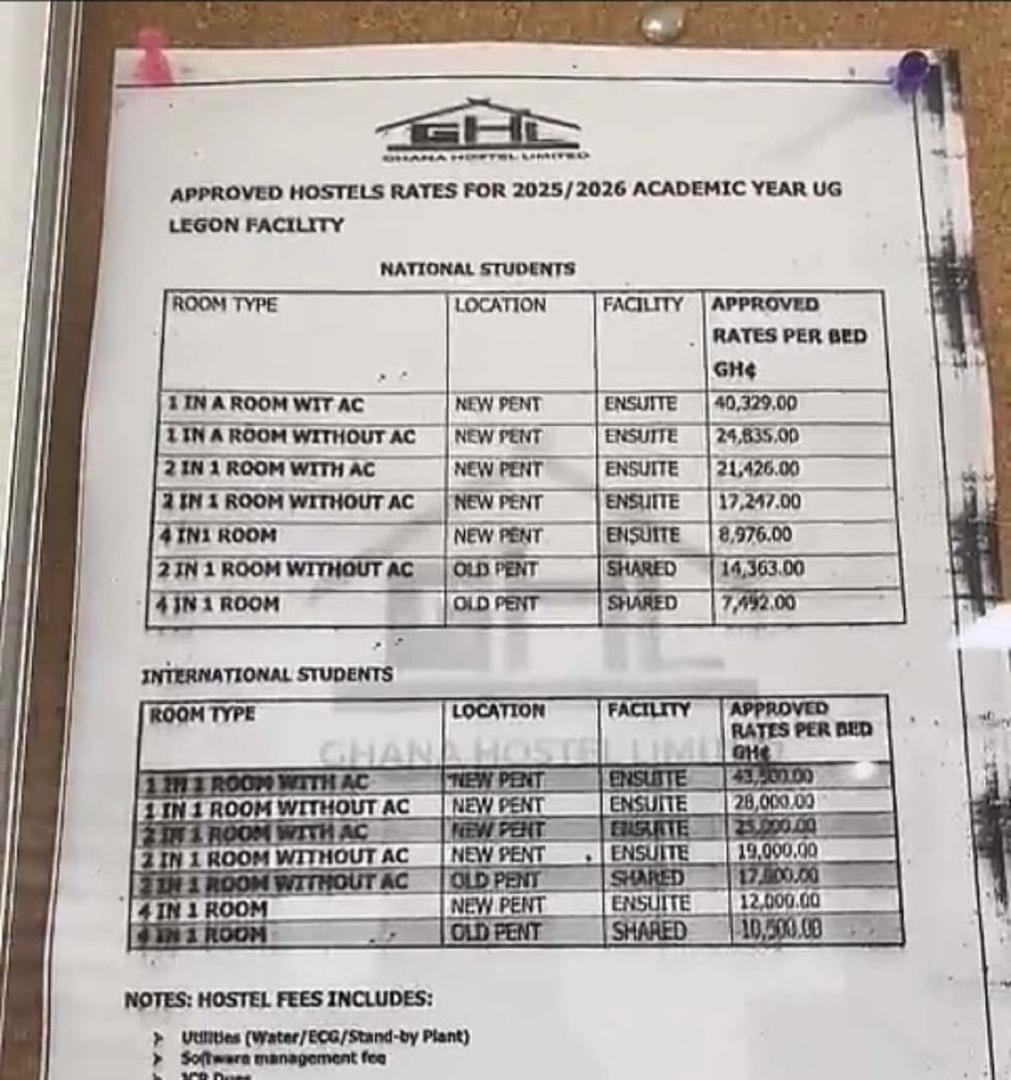
For the 2025/2026 academic year, a single air-conditioned room costs a staggering GHS 40,329 for Ghanaian students and GHS 43,500 for international students.
Even the shared rooms aren’t cheap. A four-in-one room at Old Pent runs about GHS 7,492.
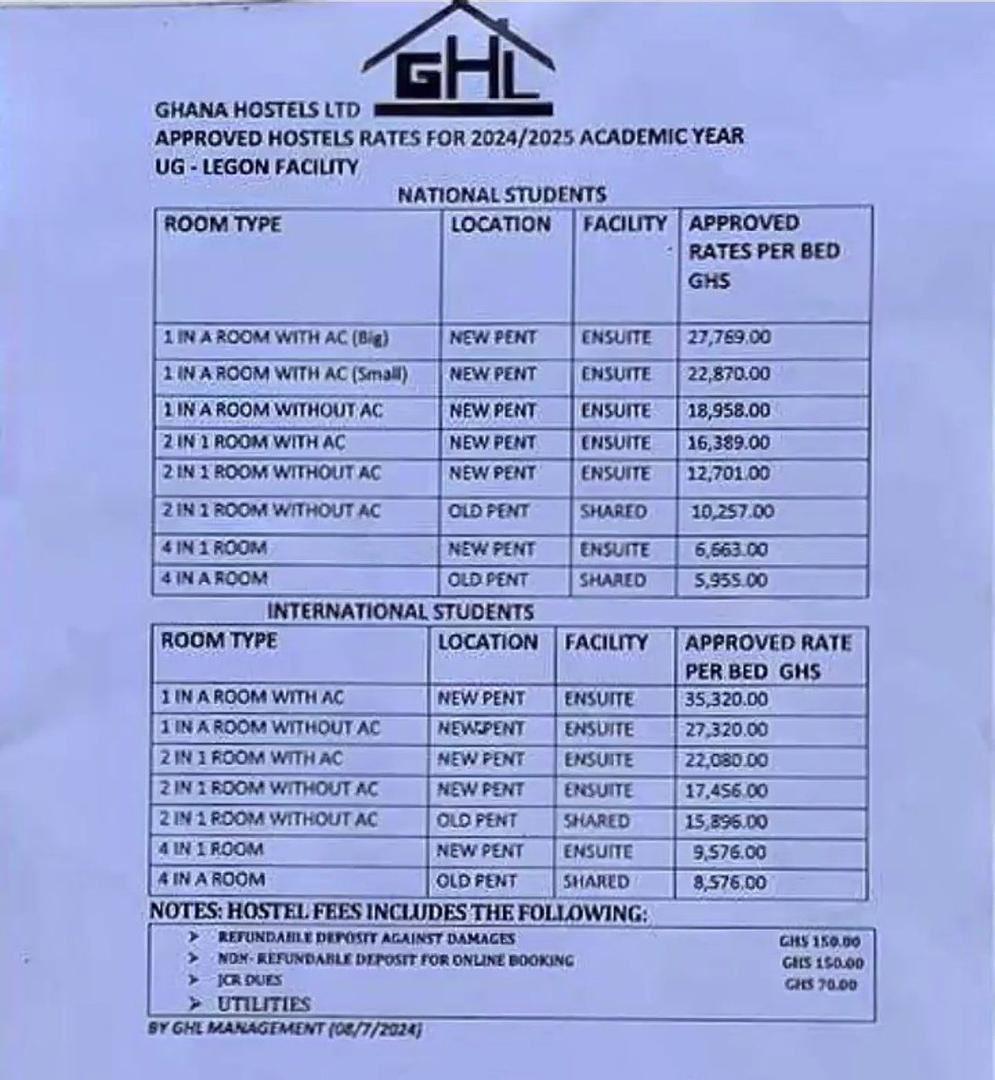
In the previous year (2024/2025), rates ranged from GHS 6,663 for a four-in-one in New Pent to GHS 27,769 for a one-in-one AC big room.
While less lucrative than Pent, Bani Hall and Evandy remain expensive. Bani’s 2020/2021 modular room rates ranged from GHS 2,200/year for a self-contained four-in-room to GHS 6,400/year for an AC chamber with a kitchen.
Evandy joins the small league of the most expensive dorms in Ghana.
KNUST: Victory Towers & Lienda Ville

Around Kumasi’s top technical university, Class-A hostels offer premium amenities at premium prices.
According to KNUST’s classification:
• One-in-one rooms: GHS 10,500–15,000/year
• Two-in-one: GHS 7,000–9,000
• Three-in-one: GHS 5,000–6,500
• Four-in-one: GHS 4,000–5,000
Lienda Ville offers ultramodern rooms with AC, fridge, DSTV/Netflix, kitchen, gym, CCTV, generator, and security.
Victory Towers and Wilkado, just minutes from campus, feature similar amenities for one- to three-in-one setups.

Students cry out over the soaring hostel fees
Students from these universities are voicing frustration over the sharp hikes in hostel and hall fees, with some warning that the rising costs are pushing them into debt and threatening their education.
“Every year they increase the hall fee… this year’s hike is very wide,” lamented Gabby, a resident of Pent Hall at the University of Ghana (UG).
Bella, another student, described the situation as “very outrageous,” adding, “we don’t have a choice, we can’t sleep outside”.
Ama, a second-year UG student, highlighted how accommodation now outweighs tuition. “My tuition is cheaper than my rent. By the time I add utilities, I start the semester already in debt,” she said.
For some, the financial strain has gone beyond frustration to survival. Kofi, a final-year student at the Kwame Nkrumah University of Science and Technology (KNUST), revealed that the steep hostel fees have forced him into evening jobs.
“I work evenings to pay rent. I’ve even thought of deferring a semester just to catch up financially,” he disclosed.
Escalating hostel fees come with many drawbacks that cut across academic, financial, and social life
Families often plan their budgets around tuition, not inflated accommodation costs, so sudden hikes throw students off balance and disrupt financial planning. The result is that many are forced to share cramped rooms, commute long distances, or even take up night jobs, choices that eat into study time, compromise sleep quality, and reduce classroom focus.
The financial strain also takes a toll on mental health. Students under pressure to secure affordable housing often end up sacrificing safety, health, and rest. This deepens inequality, as those from lower-income households feel the pinch most. With demand outstripping supply, wealthier students can afford to stay in place while others are left scrambling.
To make matters worse, fee increases frequently lack transparency. Hikes are introduced with little consultation, leaving students, particularly in highly competitive halls such as Pent, with no real choice but to pay up because alternatives are scarce.
The government and institutions’ role in easing the strain
-
Expand Affordable On-Campus Housing
The government should invest in building more traditional halls and modular hostels to reduce reliance on costly private facilities.
-
Regulate Hostel Fee Increases
Introduce policies that cap annual increments at fair, reasonable rates, with student representation in decision-making.
-
Provide Financial Support for Accommodation
Extend financial aid packages, subsidies, grants, or low-interest loans to cover hostel costs, especially for vulnerable and low-income students.
-
Ensure Transparency in Hostel Charges
Mandate that institutions and hostel operators publish clear breakdowns of fees, including rent, utilities, deposits, and dues, so students understand what they are paying for.
Until institutions address the imbalance, students will continue paying more for mattresses than for lectures.