It was a hot and humid Texas afternoon on September 12, 1962, when President John F. Kennedy stood before a crowd of more than 40,000 people at Rice University’s football stadium.
The sun beat down, but the energy was electric. Students, faculty, politicians, and journalists gathered to hear what would become one of the most defining speeches of the 20th century.
This came at a time of Cold War tensions and a rapidly escalating space race, JFK boldly declared:
“We choose to go to the moon in this decade and do the other things, not because they are easy, but because they are hard.”
Talk, as they say, doesn’t cook rice. That declaration became the blueprint for the Apollo missions, a monumental endeavour that demanded unprecedented coordination, creativity, and courage from NASA.
The path was anything but smooth. Apollo 1 ended in tragedy, claiming the lives of three astronauts during a pre-launch test. Apollo 2 and 3, and subsequent early missions, tested new technologies in uncharted territory.
Then came the defining moment: Apollo 8, which gave us the iconic “Earthrise” photo, a view of our planet that reshaped how we see ourselves. But even then, we had not yet landed.
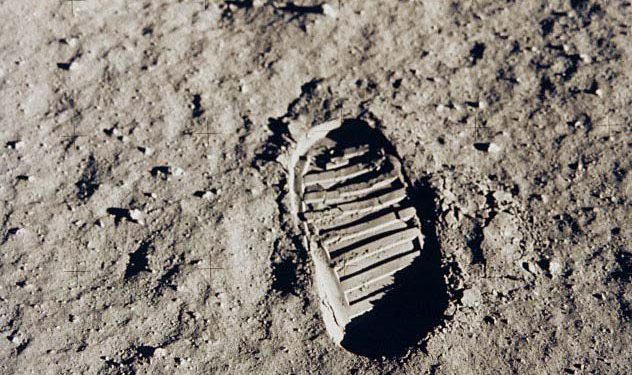
Apollo 9 and 10 tested critical systems and came close, but only orbited the moon. Finally, on July 20, 1969, after years of trial, error, and extraordinary human effort, Neil Armstrong (1930–2012) set foot on the lunar surface, followed by Buzz Aldrin (1930–). Michael Collins remained in orbit aboard the Command Module.
In total, 12 astronauts walked on the moon. Among them, Harrison Schmitt, a geologist, marked the first time a scientist set foot on another world.
56 years later, space exploration has evolved remarkably. NASA’s Artemis program now plans to land the first woman and the first person of colour on the moon, another historic milestone we must celebrate.
The space race of the Cold War era has transformed. What began as geopolitical competition has matured into a global scientific collaboration ‘party’. It is especially refreshing to see Africa now joining the ‘party by paying the entrance fee’ with the establishment of the African Space Agency (AfSA).
But I say, we have not yet landed, because as a continent, we have yet to dream, design, and pursue such a monumental lunar or planetary goal ourselves. That’s not a failure. It’s just a reality of where we are.
I believe the African Space Agency has more immediate and pressing objectives: Building capacity in planetary and space sciences, solving social challenges like unemployment through space-sector innovation, enhancing agriculture through Earth observation, improving disaster response and resilience, and expanding access to affordable and reliable internet across the continent.
Let’s walk before we fly and eventually, let’s leap. As a French proverb says, “Little by little, the bird builds its nest.” To wit, with patience, purpose, and persistent effort, great things are within reach.
The writer, Eli Djomekou is a Science Communicator and Graduate in Earth and Planetary Sciences.