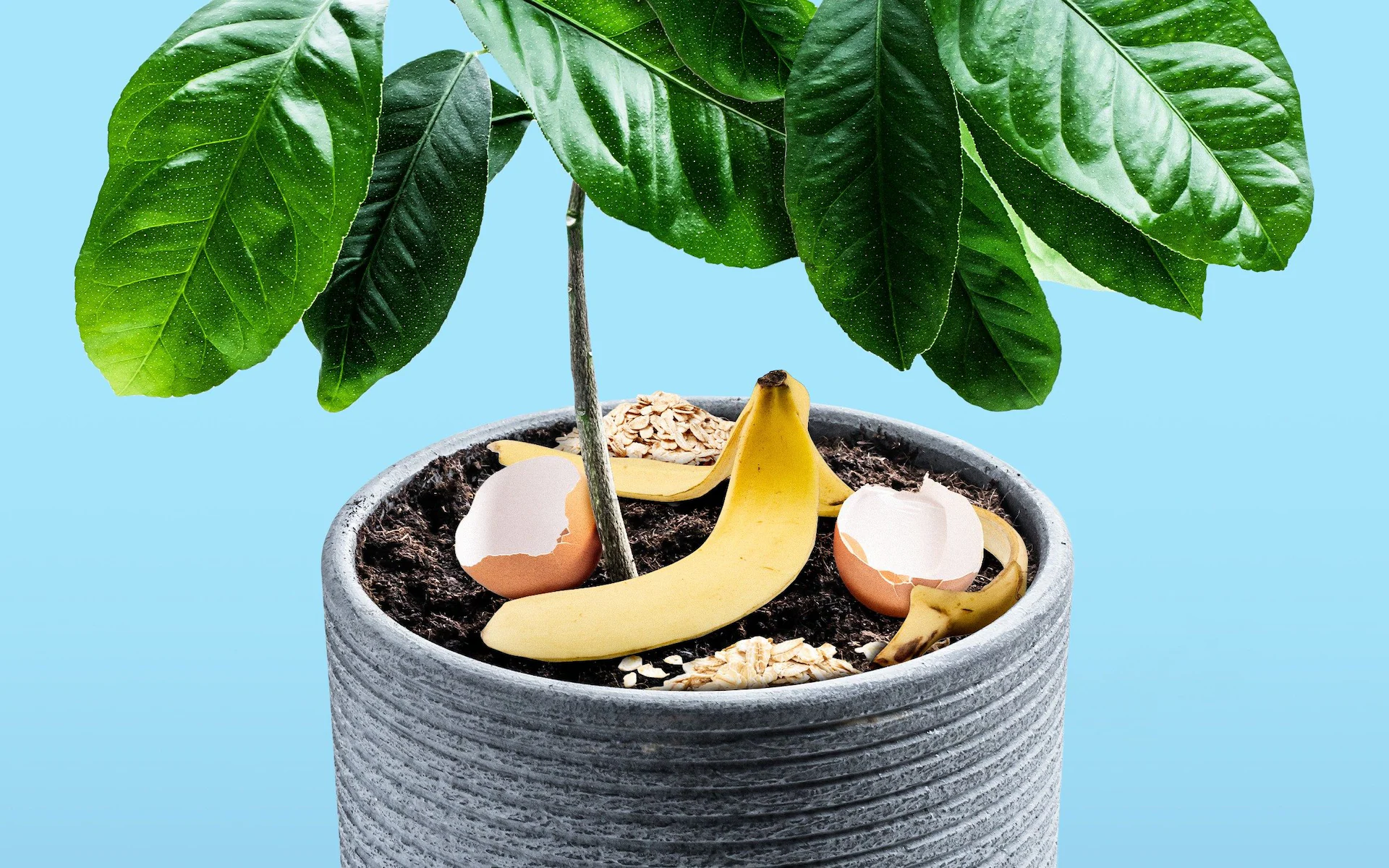
Before you throw leftover food in the bin, consider whether you might be able to use it to feed your houseplants. Household scraps such as banana peels, coffee grounds, cereals and egg shells can all become natural fertilisers.
Ingredients such as these are rich in vitamins and minerals, and could help to ensure your plants stay clean and chemical-free, if you know how to use them.
The following are eight types of kitchen leftovers and waste that you can either bury directly into the compost in your plant pots or sprinkle on the surface.
Banana peels
Bananas are rich in potassium, phosphorus and magnesium, and make an excellent natural fertiliser. You can dehydrate the peels, blend them into a fine powder, and mix two tablespoons of the powder into two cups of water, then use this mixture to water your plants for an easy, nutrient-rich boost. Or just soak the peels in water for 48 hours, discard the peels and use the steeped water to enrich your houseplant.
This natural food can be added to your houseplants every three to four weeks, and is especially beneficial for tropical varieties such as pothos, snake plants, monstera and philodendrons. It also supports the health of orchids and anthuriums.
Egg shells
Don’t toss those shells: egg shells are packed with calcium carbonate, which helps to neutralise soil pH and adds phosphorus. Rinse the egg shells to remove any residue, then let them dry completely. Crush into a fine powder using a food processor or mortar and pestle, and sprinkle lightly over the plant soil for a natural calcium boost.
You can also make a liquid fertiliser: brown the crushed eggshells in a pan, then transfer to a bottle filled with water (around four egg shells per litre). Let it sit for 24 hours, and use the water for plants.
This food, used bi-monthly, works particularly well for calcium-loving varieties such as African violets, monstera and philodendrons. However, egg shells can have a negative effect on plants that prefer acidic soil, such as azaleas.
Coffee grounds
Coffee can be a pick-me-up for plants too, working as a growth booster for acid-loving varieties. Rich in nitrogen, used coffee grounds can promote lusher foliage and prolonged growth. For this, after you’ve made a cup of fresh coffee, let the grounds dry out, then simply scoop them out and mix lightly into the plant soil.
Just be careful not to overdo it; too much caffeine can stunt plant growth. Use this food once every three weeks for houseplants that prefer slightly acidic soil, such as peace lilies, philodendrons and snake plants.
Green tea
Rich in tannic acid, green tea helps to lower the soil’s pH level, creating a more favourable environment for certain plants to thrive. To use it, simply brew the leaves in water and allow it to cool. Once it reaches room temperature, pour the tea around the base of your houseplant.
This natural fertiliser can be used once a month, and is especially beneficial for ferns and begonias.
Cereal crumbs
Don’t sweep away those leftover crumbs after breakfast; put them to good use for your plants instead. Crushed cereal crumbs can act as a gentle, slow-release fertiliser for houseplants, providing nutrients such as nitrogen, phosphorus and potassium. They’re particularly helpful for plants that thrive in well-draining soil and benefit from an extra boost of nourishment.
Note that only plain, unsweetened cereals, such as shredded wheat or oats, in tiny amounts work as plant food; the sweetened ones can attract pests such as gnats or fleas, or disrupt the soil pH. Sprinkle very small quantities of the crumbs every two months, over the top layer of potting mix. Houseplants, including peace lilies, snake plants, pothos, Swiss cheese plants, calatheas, prayer plants, spider plants, money plants and ZZ plants, can benefit from the addition of cereal crumbs.
Tea leaves and oats
Oats can also be combined with tea leaves to give your houseplants a protein boost, particularly from nitrogen, which supports healthy leaf and stem growth. Just cut open any tea bag and empty the contents into a bottle or jar, then add a tablespoon of oats. Add around 500ml boiling water and allow it to cool completely. Once cooled, strain and transfer the liquid into a bottle.
Use this nutrient-rich water for your houseplants once every three weeks. It’s especially beneficial for leafy varieties such as ferns, pilea and maranta.
Carrot juice
Carrot juice is rich in vitamins and minerals that can support healthy plant growth. While it’s not advisable to use it undiluted, when mixed with water and applied in moderation, it can help to improve soil texture and boost fertility, creating a healthier environment for root development.
To make a gentle carrot tea for your plants, combine one part carrot juice with three parts water and pour the mixture into a bottle. Use about 250ml per plant each month, applying it to both the soil and the leaves. Make sure the soil isn’t waterlogged, and keep an eye out for any signs of overfeeding. This natural tonic is especially beneficial for ferns, African violets, begonias and philodendrons.
Unsalted cooking water
While many of us throw away the water used to boil pasta or vegetables, did you know that this nutrient and starch-rich liquid can be gold for houseplants? Used as a natural fertiliser once a month in very small quantities, it can help your leaves look healthier and shinier. Just be sure the water is unsalted, unsweetened and hasn’t been used in meat or fat-based dishes, as these can attract pests such as gnats and fleas, or cause mould. Also, never pour hot water directly onto your plants; allow it to cool completely before using.
Most houseplants can benefit from this, especially those with deep root systems such as monstera and palms in large containers. Even some succulents may tolerate starchy water, which could encourage beneficial bacterial activity in the soil.