
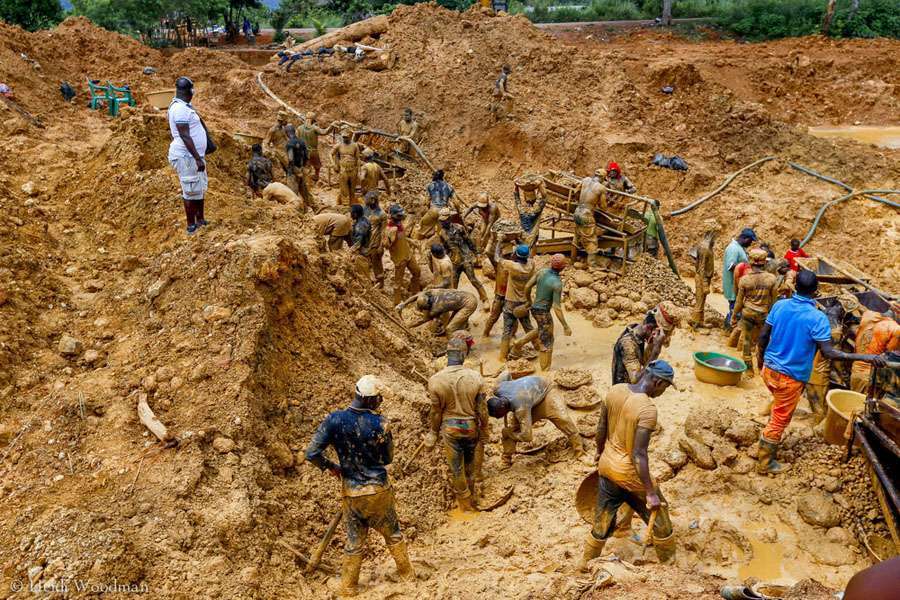
The term “resource curse” describes the paradox whereby countries rich in natural resources often experience less economic growth and worse development outcomes than those with fewer resources.
It also reflects a situation where the presence of valuable resources leads to conflict and instability instead of prosperity.
This situation can arise from various factors, including over-reliance on a single resource, neglect of other economic sectors and governance issues such as corruption and weak institutions.
In various regions of Ghana, illegal gold mining, commonly known as galamsey, has resulted in an alarming dependency on gold extraction, which is shifting focus and vital resources away from essential sectors, particularly agriculture.
This shift has led to a significant loss of agricultural land as fields once thriving with crops are now exploited for mining activities, jeopardising the nation’s food security.
Furthermore, traditional livelihoods such as farming and fishing are being severely disrupted due to environmental degradation, causing economic instability within local communities.
Cocoa plantations
Moreover, the impact on cocoa plantations has been particularly severe. Reports indicate that galamsey operators often approach cocoa farmers with offers to buy their land for mining activities.
If farmers refuse, these operators may resort to vandalism, digging beneath crops or contaminating the soil with polluted water. Such actions can devastate cocoa trees and render the land unusable.
Consequently, many farmers find themselves forced to choose between losing their farms entirely or accepting a meagre sum for selling their land to galamsey. In Denkyira Asikuma, for instance, many cocoa farmers have sold their land to galamsey miners.
In some cases, cocoa farmers are even converting their cocoa farms into galamsey sites, motivated by the higher financial return from mining compared to the income generated from cocoa beans.
This trend poses a significant threat to Ghana’s principal export commodity, providing minimal economic benefits to the nation, while undermining its agriculture foundation.
Governance
For governance issues such as corruption and weak institutions, the illegal nature of galamsey often involves corrupt party and government officials and their collaborators.
Their activities, to a great extent, undermine efforts to regulate and control the activities of illegal mining. This is done in several ways.
Galamsey operators frequently engage in activities that flout regulations by mining in restricted areas, including forest reserves and near vital water bodies and major rivers.
Such illegal mining not only poses severe environmental risks but also threatens the ecological balance in these sensitive zones. The use of toxic chemicals such as mercury and cyanide in galamsey operations contaminates water sources, posing serious health risks to local communities.
The ramifications of these actions extend far beyond the immediate area, jeopardising the health of entire ecosystems that communities rely on for their livelihoods.
Law enforcement
Moreover, the infiltration of law enforcement agencies by galamsey operators represents a critical failure of governance. Some members of the security agencies compromise their integrity for financial gain, acting as informants to illegal miners.
This collusion enables galamsey operators to evade regulatory oversight, as they are tipped off in advance about impending state interventions, inspections or crackdowns aimed at curbing illegal mining activities.
The consequences of such weak governance are far-reaching. They can be the resource curse, where the presence of valuable resources leads to conflict and instability instead of prosperity.
The lack of effective regulatory frameworks allows illegal mining to flourish unchecked, drawing in foreign nationals and exacerbating issues related to local governance.
This influx often leads to social tensions within communities as the locals become increasingly frustrated with the degradation of their environment and the erosion of their rights.
Tackling challenges
To tackle the challenges posed by illegal mining, a comprehensive approach is essential. This should include strengthening regulations, enhancing transparency and accountability, diversifying the economy, engaging communities, raising awareness and fostering international cooperation.
First, authorities must enforce stricter regulations on mining activities, ensuring compliance with environmental and safety standards.
Additionally, it is crucial to identify and penalise government officials who are complicit in illegal mining operations. Those in law enforcement who collaborate with these operators should also be held accountable.
Moreover, the introduction of laws mandating safer mining practices and proper disposal of toxic chemicals is necessary.
Second, improving transparency in the mining sector is vital. Companies should be required to disclose their activities and environmental impact assessments.
Establishing an independent regulatory body to monitor and enforce compliance can help achieve this goal.
Third, investing in other areas of the economy such as agriculture, tourism and manufacturing can help reduce reliance on mining.
The government could provide subsidies and training programmes to assist communities affected by illegal mining in finding alternative livelihoods.
Fourth, involving local communities in decision-making processes is essential. Ensuring that these communities benefit from mining activities through fair compensation and development projects can foster a more equitable environment.
This could be achieved by setting up community development funds financed by mining revenues. The state should take steps to decentralise the issuance and enforcement of mining licensing to district assemblies to better regulate mining activities.
Fifth, raising awareness of the detrimental effects of illegal mining and promoting sustainable practices is crucial. Educational campaigns in
schools and communities can inform people about the dangers associated with illegal mining and the importance of environmental conservation.
Finally, collaboration with international organisations and neighbouring countries to address cross-border issues related to illegal mining is crucial. Sharing information, resources and best practices is key to effectively combat illegal mining activities together.
The writer is a political scientist.