

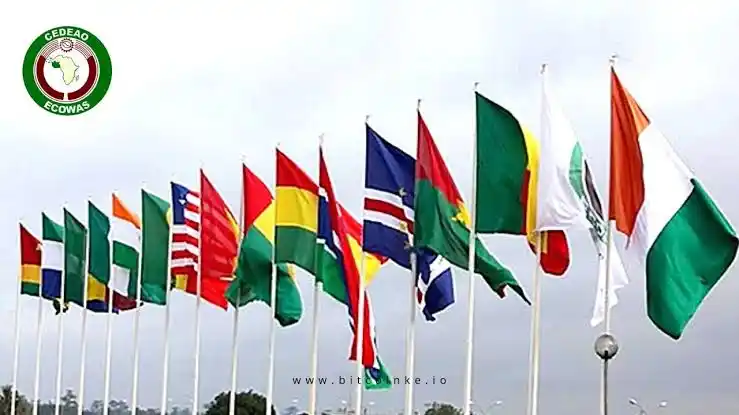
The Great ECOWAS Rupture: Modelling the aftermath of West Africa’s Regional fragmentation
The Great ECOWAS Rupture: Modelling the Aftermath of West Africa’s Regional Fragmentation
Executive Summary
- The withdrawal of the Alliance of Sahel States (AES) – comprising Mali, Burkina Faso, and Niger – from the Economic Community of West African States (ECOWAS) on January 29, 2025, marks a fundamental transformation in West African regional integration. This development presents significant implications for regional stability, economic integration, and international relations.
- Our scenario analysis identifies four potential trajectories for regional development. First, the AES will likely pursue increased autonomy, focusing on military cooperation, economic integration, and strategic partnerships with external powers. Second, ECOWAS faces pressure to adapt its institutional framework and reform its governance mechanisms while maintaining regional cohesion. Third, there is a risk of further ECOWAS fragmentation if institutional reforms fail to address member states’ concerns. Fourth, the African Union (AU) may assume an enhanced mediating role, particularly in implementing continental initiatives like the African Continental Free Trade Area (AfCFTA).
- External actor engagement patterns reveal complex dynamics that will significantly influence regional development. Western nations are recalibrating their approach through enhanced diplomatic and development partnerships. Russia is expanding its influence through military cooperation and resource development agreements, while China is accelerating infrastructure investments and economic partnerships across the region.
- The analysis reveals three critical findings that will shape regional adaptation. First, successful regional governance requires developing flexible frameworks that can accommodate diverse political systems while maintaining essential cooperation. Second, economic integration must evolve to address new regional configurations while preserving vital trade relationships. Third, security cooperation needs reconfiguration to address transnational threats within the changed regional landscape effectively.
- Based on these findings, we recommend specific actions for key stakeholders. Regional organisations should implement comprehensive institutional reforms and establish new security coordination mechanisms. National governments must develop sophisticated border management systems and create specialised economic programs for affected communities. International partners should calibrate their engagement to support constructive regional development while respecting evolving institutional arrangements.
- Implementing these recommendations requires careful sequencing and coordination across stakeholder groups to maximise effectiveness and minimise potential regional stability and development disruptions.
I. Introduction
- The withdrawal of the Alliance of Sahel States (AES) from the Economic Community of West African States (ECOWAS) on January 29, 2025, represents what Mwangi (2025) describes as a watershed moment in West African regional integration. This development, involving Mali, Burkina Faso, and Niger (Figure 1), fundamentally restructures regional political, economic, and security arrangements that have historically shaped West African cooperation, as documented by Lavergne (1997).
- Brooke-Holland (2023) documents how this transformation emerged from a complex series of events, catalysed by the July 2023 coup in Niger, during which the National Council for the Safeguard of the Homeland (CNSP) ousted President Mohamed Bazoum. As Buchan and Tsagourias (2023) analyse, this event, occurring against previous military takeovers in Mali and Burkina Faso, led to mounting tensions between these states and ECOWAS. Sow (2023) and Bassou (2024) observe how the situation intensified when ECOWAS’ consideration of coercive measures ultimately contributed to the AES’ formal withdrawal decision, as confirmed by the ECOWAS Press Release (2025b), despite a six-month extension for reconsideration.
- This analysis examines the immediate and long-term implications of this separation through systematic scenario modelling, building on frameworks developed by Westcott (2024) and ICG (2024), addressing three fundamental questions:
- How will the AES-ECOWAS split affect regional security architecture and economic integration patterns?
- What institutional adaptations will key stakeholders need to implement to maintain regional stability and development?
- How might external powers adjust their regional engagement strategies in response to this new configuration?
- The analysis proceeds through several interconnected sections. Following a detailed methodology that outlines our scenario modelling approach, we examine four potential trajectories identified by Aboagye (2025) and Oluyemi (2025): increased AES autonomy, ECOWAS adaptation and reform, potential ECOWAS fragmentation, and an enhanced role for the AU.
- Each scenario is evaluated against political, security, and socio-economic criteria, including cultural, to assess its implications for regional stability and development.
- The paper then analyses the patterns of external actor engagement, drawing on research by Obadare and Patel (2024) and Canuto et al. (2023) to examine how evolving strategies from Western nations, Russia, and China might influence regional dynamics. Finally, we present specific recommendations for regional organisations, national governments, and international partners to navigate this transformed landscape while maintaining progress toward broader development objectives.
II. Methodology
- This analysis employs structured scenario modelling to evaluate potential outcomes of the AES-ECOWAS split. The methodology follows a three-stage process: identifying key drivers of change through document analysis and historical precedents; assessing these drivers’ impact and likelihood to develop plausible scenarios; and evaluating scenarios against political, economic, and security criteria.
- The assessment framework considers three metrics: regional integration indicators (institutional cooperation and cross-border coordination), security cooperation metrics (joint operations and counterterrorism effectiveness), and economic integration measures (trade flows and resource sharing). The study draws from official documents, policy briefs, and academic analyses, mitigating uncertainties through source triangulation and evaluating historical integration patterns.
- The documentation and analysis of regional transformation processes require careful attention to information quality and verification. Regional media coverage provides valuable insights into developing situations while demanding appropriate context and confirmation. Assessing regional developments benefits from combining multiple information sources, including official communications, academic analysis, and field observations. This approach supports a more comprehensive understanding of regional dynamics while maintaining appropriate analytical standards. Developing effective information-sharing mechanisms becomes particularly important during institutional transformation, supporting informed decision-making while managing potential misunderstandings or misinterpretations.
III. ECOWAS Disintegration Process
- The chronological development reveals a complex series of events. According to Aboagye (2024 and 2025), initial strains emerged in June 2024 when AES member states raised significant concerns regarding ECOWAS’ regional governance and security management approach. Westcott (2024) describes how ECOWAS attempted to address these issues through diplomatic engagement in July 2024. However, Oluyemi (2025) notes these efforts proved insufficient as AES member states expressed growing dissatisfaction with the proposed solutions.
3.1 Chronology of Events
- The separation process evolved through several critical phases throughout 2024-2025, reflecting escalating tensions and failed diplomatic initiatives. According to the Niger Times Network’s comprehensive analysis ‘AES States Formalize Departure from ECOWAS: Analysis of Immediate Impacts’ (2025), initial strains emerged in June 2024 when AES member states raised significant concerns regarding ECOWAS’ regional governance and security management approach. The Africa Press Network’s diplomatic report ‘ECOWAS Rupture: Timeline of a Regional Divorce’ (2025) documented how ECOWAS attempted to address these issues through diplomatic engagement in July 2024. However, these efforts proved insufficient as AES member states expressed growing dissatisfaction with the proposed solutions by August 2024.
- Aboagye (2025) notes that the situation intensified in September 2024 with the formal announcement of the Alliance of Sahel States. This marked a decisive shift toward independent regional cooperation outside the ECOWAS framework, as detailed in the Africa Press Network’s special coverage of regional transformations (2025). According to Westcott (2024), this development prompted international attention. The Ghana News Agency’s diplomatic desk report, ‘Regional Implications of AES Withdrawal from ECOWAS’ (2025), documented how the AU and United Nations (UN) expressed concern in October 2024 about potential implications for regional stability.
- The trajectory toward separation became irreversible when AES member states formally declared their intent to withdraw on December 28, 2024. Despite ECOWAS’ diplomatic overture offering a six-month reconsideration period, the AES leadership remained resolute, citing fundamental disagreements over sovereignty and regional governance approaches. The Ghana News Agency’s comprehensive report ‘Regional Implications of AES Withdrawal from ECOWAS’ (2025), along with concurrent coverage from the Niger Times Network and detailed analysis in the Africa Press Network’s ‘ECOWAS Rupture: Timeline of a Regional Divorce’ (2025), documented how the process culminated on January 29, 2025, with the submission of formal withdrawal notices, triggering immediate institutional changes across the region.
3.2 Legal Framework
- The withdrawal process followed Article 91 of the ECOWAS Revised Treaty, which outlines member-state separation procedures (ECOWAS Commission, 2010). This legal framework required settling financial obligations, resolving ongoing joint projects, and establishing transitional arrangements for cross-border operations. The process revealed significant gaps in regional integration mechanisms, particularly in managing simultaneous multiple-state withdrawals.
3.3 Institutional Implications
- The institutional transformation requires careful management of immediate practical needs and longer-term structural changes. Adjusting institutional arrangements will likely proceed through multiple phases, beginning with essential operational modifications while developing frameworks for more comprehensive reform. This process demands particular attention to maintaining institutional effectiveness while building capacity for new organisational structures during the transition period. The development of modified institutional frameworks needs to account for both immediate operational requirements and the evolving nature of regional cooperation.
3.4 Immediate Regional Response
- Regional responses to the transformation reflect the complex interplay of political, economic, and security interests. Initial measures focus on maintaining essential cooperation in critical areas while developing new frameworks for longer-term engagement. This process involves careful attention to existing institutional relationships, practical coordination needs, and the management of transition risks. The development of new regional mechanisms will likely proceed through multiple channels, combining immediate practical measures with longer-term institutional development.
IV. Regional Implications Analysis
4.1 Political and Security Implications
- Westcott (2024) and Oluyemi (2025) argue that the separation fundamentally altered West Africa’s security architecture. According to their analysis, the emergence of parallel security arrangements between AES states introduced new complexities in regional security governance. Obadare and Patel (2024) observe that political implications extend beyond security considerations, noting how the split has influenced regional governance approaches. The split has influenced regional governance approaches, with some states reconsidering their alignment with ECOWAS democratic principles.
- The emergence of new political cooperation frameworks through the AES introduces complex challenges for regional security architecture. These developments require careful consideration of existing security arrangements, cross-border cooperation mechanisms, and counterterrorism efforts. Regional diplomatic relations will likely gradually transform, with states maintaining necessary security cooperation even as political frameworks evolve. The possibility of the AES countries becoming a federalist entity is an ambitious and intriguing prospect facing significant challenges and complexities that must be carefully navigated. The success of such an endeavour would require strong political commitment, effective governance reforms, and robust mechanisms to address economic and security disparities. These processes demand attention to maintaining effective coordination on transnational security challenges while respecting new institutional boundaries.
4.2 Economic Implications
- The economic consequences of the separation manifested across multiple dimensions. Trade patterns underwent significant adjustment, particularly affecting landlocked countries’ access to coastal ports. According to the Africa Press Network’s comprehensive economic analysis ‘Regional Economic Implications of the ECOWAS Split’ (2025), the disruption of established economic corridors necessitated the development of alternative trade routes and new customs arrangements.
- In light of Niger’s rejection of the ECOWAS passport for Nigerian travellers reported by Bello in the Daily Post (18 Feb 2025), the economic transition presents significant practical challenges that will require careful management. While AES states may explore various options for enhancing financial and economic sovereignty, any significant changes to monetary arrangements must account for existing economic interdependencies, trade relationships, and financial infrastructure. Developing new economic frameworks would likely proceed incrementally, focusing first on practical coordination mechanisms for trade and investment while maintaining essential financial services and market access. This approach would help manage transition risks while building capacity for longer-term economic coordination.
4.3 Social and Cultural Implications
- The separation’s impact on social and cultural ties presents complex challenges. The Ghana News Agency’s special report on border communities (2025) revealed how traditional cross-border communities, particularly along the Niger-Nigeria and Burkina Faso-Ghana frontiers, face potential disruption to established patterns of movement and exchange. The Niger Times Network’s analysis of social impacts (2025) emphasised how the situation necessitates careful management to preserve historical social connections while addressing new security and administrative requirements.
- The transformation of regional mobility frameworks presents immediate practical challenges and longer-term strategic considerations. Developing new documentation systems and mobility arrangements must account for existing movement patterns, economic relationships, and security requirements. Preserving essential economic and social connections across new institutional boundaries remains a critical priority, requiring careful attention to established trade routes and community relationships. Effective implementation demands the development of appropriate documentation and monitoring systems that can function seamlessly within the new regional context while supporting legitimate cross-border activities.
- Particular consideration must be given to maintaining traditional movement patterns that support regional livelihoods and cultural practices. These longstanding mobility patterns, including seasonal migration routes and traditional trading relationships, are essential to the regional social and economic fabric. Their preservation requires thoughtful integration into new institutional frameworks while ensuring they remain viable and secure.
- Coordinating security measures presents another crucial dimension. It requires mechanisms that protect legitimate movement while effectively addressing transnational threats. This involves developing sophisticated approaches to border management that balance security imperatives with maintaining essential regional connections. Such arrangements will likely develop incrementally, prioritising the maintenance of critical economic and social links while building capacity for more comprehensive mobility management systems that serve security and development objectives.
- These arrangements will likely develop incrementally, prioritising the maintenance of essential connections while building capacity for more comprehensive mobility management.
5.1 Scenarios for the Alliance of Sahel States
- Increased Autonomy and Cooperation within AES
Institutional Development and Regional Influence
- The AES emerges as a cohesive regional bloc, characterised by deepening military cooperation, economic integration, and strategic diplomatic partnerships. This scenario envisions the AES successfully establishing autonomous institutional frameworks while maintaining selective engagement with external partners.
- The analysis projects significant evolution in AES institutional development and regional influence. The alliance shows potential for deepening integration across military, economic, and diplomatic dimensions, though this development path faces notable challenges, as Bassou (2024) and Aboagye (2025) caution.
Military Cooperation and Integration
- Military cooperation will remain a primary focus of Sahelian consolidation in combatting existential threats of terrorism. The recent implementation of coordinated border security measures indicates progress toward deeper military integration. Bøås (2019) and Obadare and Patel (2024) document how establishing joint security frameworks, particularly for counterterrorism operations, demonstrates the alliance’s commitment to collective security. Their research highlights initial steps toward standardising military protocols and developing shared intelligence capabilities.
Economic Integration Initiatives
- Managing shared resources, particularly mineral wealth, moves toward coordinated economic governance. However, the success of these initiatives will depend significantly on overcoming existing infrastructure limitations and addressing disparate economic capacities among member states.
- Canuto et al. (2023) demonstrate that economic integration initiatives within the AES framework reveal an ambitious scope. Westcott (2024) and Canuto et al. (2023) identify ambitious economic integration initiatives within the AES framework. Their analysis shows that the AES leadership has initiated plans to harmonise trade policies and develop shared infrastructure. Boureima (2024) notes that introducing a regional passport marks the first step toward broader economic cooperation. While examining resource management plans, Ghanaweb (2024) observes that the success of these initiatives depends significantly on overcoming existing infrastructure limitations and addressing disparate economic capacities among member states.
Diplomatic Engagements
- The AES pursues a multifaceted approach to diplomatic engagement. While maintaining distance from traditional Western partnerships, the alliance develops relationships with alternative international partners. Engagement with North African states, particularly Algeria and Libya, indicates an emerging Sahel-Saharan cooperation framework. The coalition also shows interest in establishing diplomatic channels with regional powers like South Africa and Ethiopia, suggesting aspirations for broader continental influence. Kohnert (2024) and Alexander (2024) explore these prospects.
- Implications for AES
Enhanced Military Cooperation
- The AES will likely utilise its newfound autonomy to pursue a more assertive security, economic self-sufficiency, and regional cooperation agenda. This will include operationalising fully the 5,000-strong joint military task force, with potential support from external partners such as Russia, China or Turkey, albeit on a limited scale, to address the gap left by diminishing Western influence (Bøås, 2019; Obadare & Patel, 2024; Clingendael, 2023). According to Aboagye (2025) and Bassou (2024), this could involve strengthening military alliances by focusing on counterterrorism operations against extremist groups in the Sahel discussed by Bøås (2019).
Economic Integration
- AES countries continue to show economic resilience and growth underpinned by potential significant challenges—political instability, security threats, and regional dynamics. The recent introduction of a regional passport also illustrates their commitment to deeper broad-based integration (Obadare & Patel, 2024).
- Westcott (2024) argues that the AES could foster substantial economic collaboration among its member states through focused initiatives in shared resources and trade agreements. Canuto et al. (2023) suggested earlier that such collaboration should prioritise joint development projects specifically designed to address the region’s economic challenges. According to their research, this may involve enhanced sovereign management of natural resources and the establishment of a common market or currency to facilitate trade.
- Boureima (2024) emphasises that these efforts should be aligned with coordinated initiatives to achieve economic autonomy and enhanced sovereignty. An empirical study by the UN (2021) highlights the importance of incorporating socio-economic measures, including education, vocational training, agricultural development, and industrialisation, to address widespread poverty among AES populations. Supporting this view, a Ghanaweb (2024) publication notes that such comprehensive economic integration could significantly improve living standards across the region.
Diplomatic Relationships
- As the AES enhances its diplomatic relationships, Kohnert (2024) identifies several potential pathways for the AES to enhance its diplomatic relationships, particularly with non-ECOWAS countries. Their analysis suggests that fostering ties with North African states could create new opportunities for regional cooperation. Alexander (2024) extends this perspective, arguing that the AES should explore partnerships with regional powers such as South Africa and Ethiopia to establish broader continental influence.
- Further developing this analysis, Kohnert (2024) emphasises the importance of strengthening Sahel-Saharan cooperation with Maghreb countries, specifically Mauritania, Morocco, and Algeria. Alexander (2024) suggests that establishing a more comprehensive network of regional alliances could enhance the AES’s strategic position. According to his research, particular attention should be paid to emerging bilateral relations with coastal ECOWAS states. They note Togo’s current positioning and Benin’s economic dependence on supplies to its landlocked northern neighbours as critical factors that could influence these states’ stance toward the AES project.
5.2 Scenarios for ECOWAS Adaptation and Reform
- Institutional Adaptation
- ECOWAS will be obliged to undertake a thorough institutional transformation in response to the AES withdrawal, concentrating on reforming its governance structures, security frameworks, and economic mechanisms. This scenario explores how ECOWAS adapts its regional role while ensuring stability among the remaining member states. Obasi (2023) emphasises that the organisation’s response must encompass comprehensive structural reforms, security reconfigurations, and economic adjustments. Adapting ECOWAS governance mechanisms represents a complex institutional challenge that requires balancing established principles with emerging regional realities. Mathur (2024) examines how this process necessitates careful consideration of existing institutional frameworks while developing approaches that can accommodate evolving regional dynamics.
- The development of modified governance mechanisms must consider multiple factors, including maintaining institutional effectiveness, protecting essential regional cooperation, and cultivating sustainable political dialogue. This process will likely require sustained engagement with member states to develop practical solutions that address immediate governance challenges and longer-term regional stability objectives.
- Security Reconfiguration
- ECOWAS will similarly deem it imperative to reconfigure its security architecture. Westcott (2024) argues that security arrangements demand significant recalibration in light of recent developments. The analysis illustrates how the Sahel’s loss of strategic depth necessitates new approaches to regional security management. Building on this perspective, Oluyemi (2025) documents ECOWAS’s efforts to develop alternative security frameworks, particularly highlighting the increased emphasis on maritime security and coastal state cooperation. According to the research, these adjustments are specifically designed to uphold regional stability while considering the altered geographic and strategic landscape.
- Economic Restructuring and Adaptation
- The ECOWAS Commission Press Statement (2025) outlines economic restructuring efforts that strengthen existing trade networks and develop new economic corridors. The organisation’s official documentation reveals that it has initiated comprehensive studies on alternative transportation routes and trade facilitation mechanisms. Westcott’s (2024) earlier analysis of these developments noted that particular attention was given to supporting landlocked states’ access to coastal ports as mandated by international laws. The research further indicates that these efforts aim to maintain the momentum of regional economic integration despite the region’s structural changes.
- Sub-Regional State Actor Responses
Nigeria’s Hegemonic Response
- Obasi (2023) and Mathur (2024) analyse Nigeria’s strategic response as the ECOWAS hegemon. His research indicates that Nigeria has pursued several key initiatives, including strengthening security measures along its extensive borders with Niger and implementing stricter cross-border trade controls. In examining immediate neighbour responses, Westcott (2024) and Oluyemi (2025) highlight how Benin and Togo face distinct challenges and opportunities, particularly regarding economic consequences from disrupted trade routes.
- As the ECOWAS hegemon, Nigeria will likely pursue several strategic responses to the AES departure. In terms of border control, Nigeria may significantly strengthen security measures along its extensive borders with Niger, implementing stricter cross-border trade and movement controls while developing new customs and immigration protocols to address the changing regional dynamics. Nigeria’s response will likely balance multiple strategic interests, including maintaining regional stability, protecting economic relationships, and ensuring border security. While Nigeria may adjust specific economic and security policies to reflect the new regional configuration, these changes must consider the complex interdependencies with neighbouring states and border communities. This suggests a measured approach that preserves essential cross-border cooperation while adapting to new institutional realities.
- On the diplomatic front, Nigeria may lead ECOWAS initiatives to prevent further regional fragmentation, carefully balancing its relationships with Western allies while maintaining regional stability and developing new frameworks for engagement with AES states that reflect the changed political landscape.
Immediate Neighbours’ Responses
- Westcott (2024) analyses how the immediate neighbours of AES member states face distinct challenges and opportunities in the new regional configuration. According to the research, Benin and Togo, which share direct borders with AES members, may experience significant economic consequences from disrupted trade routes and heightened security challenges along their borders. Oluyemi (2025) builds on this analysis, noting that despite previous terrorist attacks in these border regions, the current situation could allow these states to mediate between ECOWAS and the AES, potentially enhancing their regional diplomatic importance.
- Westcott (2024) examines how Ghana and Côte d’Ivoire’s roles within ECOWAS may evolve in response to the new regional configuration. Multiple factors, including economic interests, security concerns, and existing bilateral relationships, will likely shape their engagement. While these states may take on additional responsibilities in specific areas, such as regional trade coordination or diplomatic initiatives, their actions must complement rather than compete with Nigeria’s established regional role. The effectiveness of their contributions will depend on developing coordinated approaches that address shared regional challenges while respecting each state’s particular circumstances and capabilities.
- Cross-Cutting Regional Implications
- The ECOWAS Commission Press Statement (2025) emphasises that regional reconfiguration necessitates new approaches to security coordination across the region. Relating to that perspective, Westcott (2024) argued that states must develop new frameworks for cross-border security cooperation while managing the risk of fragmented counterterrorism efforts. Their analysis suggests this evolution may lead to new regional security arrangements that better reflect the post-split reality.
- According to Westcott (2024), economic adaptations will require significantly restructuring regional trade rules and routes. The research indicates that states will need time to adjust relevant agricultural and commercial policies while developing new economic partnerships. The ECOWAS Commission Press Statement (2025) highlights the impact on informal cross-border trade networks, noting that these historically vital economic connections will require careful management and potentially new regulatory frameworks.
- Migration Management
- Obasi (2023) identifies migration management as a critical challenge for all regional actors in the post-split context. His analysis emphasises the need for states to develop new approaches to managing cross-border movements, particularly given the region’s historical mobility patterns. Mathur (2024) extends this analysis by examining the implications for traditional pastoral routes and communities that have historically moved freely across these borders.
- Managing cross-border movements requires a carefully balanced approach recognising security imperatives and longstanding socio-economic relationships. Practical solutions will need to address multiple challenges, including:
- The maintenance of essential trade and labour flows
- The protection of traditional pastoral routes and seasonal migration patterns
- The development of appropriate documentation and monitoring systems
- The coordination of security measures across new institutional boundaries
- Implementing these measures would likely proceed gradually, prioritising maintaining critical economic and social connections while building capacity for more comprehensive management systems.
- Potential for Reintegration
- Obasi (2023) analyses potential pathways for future AES-ECOWAS cooperation, noting that significant institutional changes would be necessary on both sides. Any movement toward closer coordination would likely begin with specific sectoral cooperation – such as security or trade – rather than full reintegration. This process would require addressing fundamental sovereignty concerns and establishing new frameworks for regional cooperation that accommodate diverse governance models.
- Mathur (2024) examines how shifts in the dynamics of external actors, particularly a reduction in Russian influence or increased Western development support, might influence reintegration prospects. Their study identifies several critical prerequisites for successful reintegration. These include ECOWAS adopting a more flexible approach to the timelines of democratic governance, establishing mutually acceptable security cooperation frameworks, and ensuring economic autonomy within the broader regional context.
- Concerning these findings, Obasi (2023) argued that reconciliation requires careful sequencing. Their analysis suggests a graduated approach, potentially commencing with observer status or partial membership arrangements before progressing to full reintegration. Mathur (2024) reinforces this perspective, emphasising that successful reintegration would depend on developing comprehensive frameworks that address both immediate practical concerns and longer-term strategic considerations.
5.3 Scenario: Strained Relations and Internal ECOWAS Fragmentation
- Implications for ECOWAS
Political Tensions
- The departure of the AES, a trigger of broader institutional strain within ECOWAS, may lead to further fragmentation as member states reassess their alignment with regional policies and obligations. This scenario explores the challenges to ECOWAS cohesion and potential paths toward maintaining regional unity.
- Obadare and Patel (2024) argue that the departure of the AES could lead to considerable fragmentation within ECOWAS, posing significant challenges to maintaining its influence and cohesion. Van Walraven (1999) had identified how existing political rifts within ECOWAS may be exacerbated, particularly regarding differing approaches to governance, democratic norms, and security strategies. Building on this analysis, Bøås (2019) also examined how member states could become divided along ideological lines, especially concerning security and cooperation preferences.
- Regional dynamics present complex challenges for international partnerships and collective decision-making. States must navigate existing relationships while responding to changing strategic circumstances. This process requires careful consideration of economic interdependencies, security cooperation frameworks, and development partnerships. The effectiveness of regional decision-making mechanisms will depend on developing approaches that can accommodate diverse international relationships—Western powers, Russia, and China—while maintaining essential regional cooperation.
Security Challenges
- Zounmenou and Loua (2011) analysed how security threats may intensify as the AES prioritises its national interests over existing collective security agreements. Developing this perspective, Obadare & Patel (2024) and Edds-Reitman & Boakye (2024) validate how ECOWAS could face mounting difficulties in addressing the escalating instability in the Sahel. Their research identifies potential spillover effects, including increased migration and cross-border insurgencies. According to their analysis, this evolving situation necessitates both improved counterterrorism measures and careful consideration of broader regional stability issues.
Re-evaluation of the ECOWAS Mandate
- Obadare and Patel (2024) emphasise that the organisation must critically reevaluate its mandate and effectiveness. Their analysis reveals how this reassessment is prompting extensive discussions on reforming ECOWAS structures, enhancing its conflict resolution mechanisms, and reconsidering its approach to member engagement. The research shows that these developments will compel ECOWAS to reactivate its governance. The protocol revision process has stalled since 2015, and this delayed reform could exacerbate existing regional tensions.
5.4 Scenario: Enhanced AU Role
- Evolving Expanded Responsibilities in Mediation and Coordination
- The AU will assume an expanded role in regional affairs, positioning itself as a key mediator between ECOWAS and the AES while accelerating continental integration initiatives. In this scenario, the AU will be expected to leverage this regional transformation to maintain and strengthen pan-African cooperation frameworks.
- Staeger (2023) and Aboagye (2025) examine how the AU’s position has significantly evolved in response to the regional reconfiguration. Their analysis shows that the continental body assumes expanded mediation and regional coordination responsibilities, including facilitating dialogue between ECOWAS and the AES through specialised task forces and diplomatic initiatives. Regarding economic integration, the AU (n.d.) emphasises how implementing the African Continental Free Trade Area (AfCFTA) gains new significance in this context, while UNECA (2023) documents efforts to accelerate AfCFTA implementation across the divided region.
- Economic Integration and AfCFTA Implementation
- Implementing continental integration initiatives in this context requires careful consideration of practical constraints and opportunities. Developing effective integration frameworks must account for new regional dynamics while maintaining momentum toward broader continental objectives. This process demands particular attention to:
- The development of practical mechanisms for managing trade and investment flows across new institutional boundaries
- The establishment of appropriate technical standards and regulatory frameworks that can accommodate diverse regional arrangements
- The creation of effective dispute resolution mechanisms that respect both regional and continental priorities
- The cultivation of institutional capacity for managing complex integration processes
- Progress in these areas will likely proceed incrementally, focusing on sectors where practical cooperation can be achieved while building foundations for broader integration efforts.
- While Aboagye (2025) notes the AU’s vision of AfCFTA as a potential bridge between divided regional blocs, several practical obstacles emerge. Mathur (2024) identifies the disruption of existing trade corridors affecting landlocked AES countries as an immediate challenge, requiring careful recalibration of implementation timelines and mechanisms. Canuto et al. (2023) emphasise how potential parallel currency arrangements within the AES could complicate AfCFTA’s standardised trade facilitation measures, necessitating innovative approaches to cross-regional transactions.
- Building on this analysis, Westcott (2024) argues that successful implementation requires developing flexible compliance mechanisms, clear protocols, robust dispute resolution systems, and harmonised customs procedures. Ultimately, effectively leveraging AfCFTA in this context will demand fundamental adaptations to the agreement’s operational frameworks, which extend beyond simply accelerating existing implementation efforts.
- Implementing Agenda 2063 in a Regional Fragmentation Context
- The AES-ECOWAS split presents both challenges and opportunities for implementing Agenda 2063. While Staeger (2023) acknowledges that this regional fragmentation contradicts continental unity goals, it may accelerate certain aspects of African development and integration. Supporting this view, Aboagye (2025) identifies how forming alternative regional blocs could serve as testing grounds for innovative integration approaches, particularly in developing African solutions to African challenges.
- The financial dimension offers promising prospects. Canuto et al. (2023) demonstrate how this regional restructuring could accelerate the development of African-led financing mechanisms, potentially expediting the establishment of robust continental financial institutions. However, Westcott (2024) emphasises that realising these benefits requires carefully managing tensions between regional autonomy and continental cohesion.
- The AU’s success in implementing Agenda 2063 amid these changes depends on developing flexible frameworks to accommodate diverse regional development paths while maintaining momentum toward broader continental objectives. This approach may create new pathways for achieving Agenda 2063’s transformative vision, even as it challenges traditional integration approaches (AU, n.d.).
- Implications for the AU
Enhanced Mediating Role
- The regional reconfiguration presents both opportunities and challenges for AU engagement. While the AU’s institutional capacity for mediation could prove valuable, its effectiveness would depend on multiple factors, including member state buy-in, resource availability, and coordination with other regional bodies. The AU’s role would likely focus on areas with demonstrated capacity, such as technical support for cross-border cooperation and framework development for regional security coordination (Staeger, 2023; Aboagye, 2025).
Promotion of Pan-Africanism
- The AU could capitalise on this situation to foster a more unified African agenda, emphasising the significance of Pan-Africanism and regional solidarity in tackling the continent’s shared challenges. This might include campaigns promoting collaboration rather than fragmentation (AU, n.d.).
Revitalisation of Continental Free Trade Area
- The departure may encourage the AU to accelerate efforts to implement the AfCFTA, which focuses on economic integration across the continent. This could alleviate some of the economic impacts of the AES’ departure from ECOWAS (AU, n.d.).
5.5 External Actors Engagement: Implications
- Major global powers will adjust their regional engagement strategies in response to West Africa’s changing political landscape. This scenario analyses how Western nations, Russia, China, and Turkey, modify their approaches to maintain influence and advance regional strategic interests.
- Figure 3 (below) illustrates the analysis of scenarios for external actors and the nature and implications of their engagements with the AES, ECOWAS, and the continent.
- Great Powers Realignments
Western Strategic Adjustments
- Tripp (2025) analyses how the regional reconfiguration prompted significant adjustments in Western engagement patterns. According to the research, the U.S. and European Union (EU) initiated comprehensive revisions to their regional engagement strategies, with increased attention to maintaining influence through enhanced diplomatic and development partnerships. The possibility of changing U.S. political leadership introduces additional complexity to Western engagement patterns. Strategic planning must incorporate contingencies for shifts in U.S. foreign policy, including various scenarios regarding security cooperation and regional priorities. These considerations will likely influence regional actors’ development of their security capabilities and partnership frameworks.
- Examining European engagement specifically, Chin and Bartos (2024) observe that French policymakers have begun developing new approaches to regional influence, moving beyond traditional security partnerships toward more comprehensive economic and developmental engagement. Their analysis suggests this shift reflects recognition of changing regional dynamics and the need to address perceptions of neocolonial influence.
Emerging Powers’ Regional Initiatives
- Oluyemi (2025) documents how Russia’s engagement with the region evolved significantly following the AES-ECOWAS split. The research reveals that Russian strategic interests manifest through expanded military cooperation agreements and development partnerships.
- The evolution of external power engagement in the region reflects complex geopolitical dynamics that extend beyond simple bilateral relationships. Multiple factors, including existing regional partnerships, economic interests, and broader strategic considerations, will likely shape external actors’ involvement. Developing new engagement patterns will require careful attention to regional stability and institutional capacity. External partnerships will likely evolve gradually, focusing on sectors where cooperation can deliver practical benefits while managing potential tensions among external actors’ interests.
- Analysing Chinese engagement, Canuto et al. (2023) note that Beijing has focused primarily on economic and infrastructure development, accelerating regional investment programmes, particularly in transportation infrastructure and resource extraction projects. Their study indicates that China’s Belt and Road Initiative (BRI) serves as a framework for expanding influence, with new projects designed to connect West African markets more effectively with commercial networks.
- Global Conflict Positioning and Foreign Policy Evolution
- Staeger (2023) demonstrates how the regional reorganisation has significantly influenced African states’ positions on major international conflicts. The analysis reveals increasing diplomatic diversity in responses to the Russia-Ukraine conflict, with states adopting positions ranging from studied neutrality to explicit alignment with either Western or Russian perspectives. This variation in diplomatic stances reflects broader shifts in regional alliance patterns and highlights the growing sophistication of African international relations. Similar diplomatic evolution is evident in African responses to the Hamas-Israel conflict. States across the continent have shown enhanced capacity for independent foreign policy formulation, carefully balancing historical alliances with domestic political imperatives. This development signals Africa’s maturing ability to articulate autonomous diplomatic positions while maintaining strategic relationships across the international community.
- Scenarios for External Partners and Actors
Sub-Scenario 1: Increased Western Engagement and Support for Democratic Governance
- In response to the division within ECOWAS, the U.S. and other Western actors might bolster their diplomatic efforts to foster democratic governance and stability in West Africa (Chin & Bartos, 2024). Western engagement in the region will likely evolve through multiple channels, influenced by regional developments and domestic considerations in Western nations:
- The development of more targeted development partnerships focusing on specific sectoral needs and institutional capacity building. These would likely emphasise practical cooperation in areas of mutual interest rather than broad financial support
- Security cooperation would likely focus on building sustainable regional capabilities through technical assistance and specialised training rather than direct military support. This approach would need to account for complex regional dynamics and varying institutional capacities
- Diplomatic engagement would emphasise practical cooperation on shared challenges while acknowledging the region’s increasing strategic autonomy. This could include supporting regional initiatives and solutions while maintaining constructive dialogue with regional actors
- Overall, this scenario may enhance the U.S. and Western partners’ role in West Africa, fostering deeper political ties with aligned states. However, it could heighten anti-Western sentiments, particularly against France, potentially undermining Western influence efforts. Nations perceiving American and French influence as neocolonial might increasingly resist Western engagement, leading to further regional polarisation.
Sub-Scenario 2: Russia’s Geopolitical Manoeuvring
- Russia may exploit the ECOWAS divide to bolster its influence in West Africa (Oluyemi, 2025). This scenario could involve:
- Political Alliances:
Russia could form or bolster alliances with regimes that resist Western influence, offering military and economic support in return for political loyalty
- Energy Diplomacy:
As African countries’ energy requirements grow, Russia could offer beneficial energy agreements, positioning itself as an essential partner in resource development
- Narrative Construction:
Russia may seek to expand its influence in West Africa through various means, including strategic messaging that emphasises sovereignty and non-intervention principles. This could include a) developing bilateral security and economic partnerships; b) offering alternative cooperation frameworks; and c) promoting multilateral engagement outside traditional Western-led structures
- These developments could lead to increased strategic competition between external powers in the region.
Sub-Scenario 3: Chinese Economic Expansion and Infrastructure Development
- The evolution of Chinese economic engagement in West Africa will likely reflect regional transformation dynamics and broader international development patterns. Chinese involvement in regional infrastructure and economic development requires careful consideration of existing institutional frameworks, development priorities, and financial sustainability. The effectiveness of these economic partnerships will depend significantly on developing approaches that support regional development objectives while maintaining appropriate project governance and risk management frameworks. Economic cooperation will likely emphasise sectors where Chinese engagement can provide practical benefits while supporting sustainable regional development. This process demands particular attention to debt sustainability, project viability, and the development of local institutional capacity.
Sub-Scenario 4: Impact on African Policies Regarding Global Conflicts
- The ECOWAS split could notably influence the stances of African nations concerning international conflicts like the Russia-Ukraine war and the Hamas-Israel conflict (Staeger, 2023). Possible outcomes may include:
- Divergent Stances:
Nations aligned with the pro-Western bloc take positions that denounce aggression in both conflicts, while others side with Russia or maintain neutral positions
- Regional Solidarity:
The division encourages regional solidarity and non-interference discussions, especially among nations facing neocolonialism and external interventions
- Peace Initiatives:
African nations lead in mediating conflicts, utilising their unique positions to promote dialogue and peaceful resolutions
VI. Implementation Framework
- Examining the transformation of West African regional dynamics, Obasi (2023) and Mathur (2024) propose a structured implementation approach across multiple timeframes. This framework requires careful attention to both immediate operational needs and longer-term strategic objectives while recognising practical constraints.
6.1 Consolidated Implementation Timelines
- Short-term Phase (2025-2026)
- According to Westcott (2024), the immediate implementation period must focus on establishing foundational structures and managing transition challenges. While some technical arrangements, particularly those related to immediate border management and trade flows, may develop relatively quickly, broader institutional frameworks will require more time to evolve. Building on this analysis, Oluyemi (2025) emphasises how ECOWAS should prioritise institutional stability through emergency protocols and interim arrangements for cross-border cooperation. The AU’s role in monitoring and supporting these developments will need to adapt to emerging challenges and opportunities.
- Medium-term Phase (2026-2028)
- Canuto et al. (2023) suggest that the intermediate period should emphasise consolidating new regional arrangements and developing sustainable cooperation mechanisms. Their research indicates that ECOWAS must advance its institutional reform agenda, including revising governance protocols and establishing new economic corridors. The AES progresses toward deeper integration by implementing joint security frameworks and harmonising economic policies. Continental integration efforts accelerate through enhanced AfCFTA implementation and the development of cross-regional cooperation frameworks.
- Long-term Phase (2028-2030)
- Aboagye (2025) outlines how the extended implementation period should focus on achieving comprehensive regional transformation and establishing sustainable cooperation mechanisms. This phase includes fully operationalising parallel regional systems, developing complementary economic frameworks, and establishing lasting security arrangements. It culminates in the potential introduction of new currency arrangements within the AES and the completion of significant infrastructure projects linking various regional blocs.
6.2 Key Implementation Milestones
- Critical markers for successful implementation include establishing functional cross-border security mechanisms, operationalising new trade protocols, and developing effective institutional frameworks within both ECOWAS and the AES. Mathur (2024) and Edds-Reitman & Boakye (2024) identify several risks, including possible regional fragmentation, complications in maintaining diplomatic cohesion, and potential escalation of regional conflicts. Supporting this analysis, Westcott (2024) notes that economic challenges encompass disruption of established trade patterns and potential financial instability during the transition period.
- Mitigation strategies focus on developing robust monitoring systems, establishing clear communication channels between regional bodies, and maintaining flexibility in implementation timelines to accommodate emerging challenges. The framework emphasises the importance of regularly assessing and adjusting implementation approaches based on observed outcomes and changing regional dynamics
VII. Conclusion
- The Alliance of Sahel States’ withdrawal from ECOWAS marks a fundamental transformation in West African regional integration, with far-reaching implications for regional stability, economic development, and international relations. Our scenario analysis reveals that this transformation extends beyond institutional reorganisation, presenting complex challenges and significant regional development and stability opportunities.
- The emergence of parallel regional frameworks necessitates sophisticated approaches to managing security cooperation, economic integration, and diplomatic relations. The analysis demonstrates that success in this new regional architecture depends critically on stakeholders’ ability to develop adaptive, innovative approaches while maintaining essential cross-institutional cooperation. This is particularly crucial given the region’s interconnected security challenges and deeply embedded economic relationships that transcend new institutional boundaries.
- The strategic responses of key stakeholders indicate an evolving regional dynamic that demands sustained attention and forward-thinking approaches. Nigeria’s adaptation to its modified regional role, the strategic repositioning of neighbouring states, and the African Union’s expanded regional presence all suggest potential for constructive regional evolution despite initial disruptions. The engagement patterns of external powers—particularly the United States, Russia, and China—add layers of complexity while creating opportunities for diverse partnership arrangements that could benefit regional development.
- Our analysis concludes that long-term regional stability and development will depend heavily on stakeholders’ capacity to balance competing interests while maintaining focus on shared objectives. This requires careful attention to three critical areas: coordinated security responses to transnational threats, integrated economic development that transcends new political boundaries, and sophisticated diplomatic engagement that bridges institutional divides. The future of West African regional cooperation now rests on developing innovative frameworks that can accommodate diverse political systems and economic models while preserving essential regional cohesion and stability.
- The analysis supports several specific recommendations for key stakeholder groups:
8.1 For Regional Organisations
- ECOWAS should:
- Implement comprehensive institutional reforms focusing on flexible governance mechanisms that can accommodate diverse political systems while maintaining core democratic principles
- Establish specialised cross-border security coordination centers to manage transnational threats and migration challenges
- Develop new economic corridors and trade facilitation mechanisms to maintain regional economic integration
- Create innovative financing mechanisms to support infrastructure development across the modified regional landscape
- Develop targeted cooperation mechanisms with neighbouring regions on specific security challenges, recognising the interconnected nature of regional threats
- Strengthen internal resource mobilisation while strategically leveraging external partnerships to support priority initiatives
- Build institutional capacity for project implementation and monitoring, with emphasis on sustainable funding models
- The AU should:
- Strengthen its conflict prevention and mediation efforts by establishing dedicated rapid response teams
- Accelerate implementation of the AfCFTA with a specific focus on bridging new regional divisions
- Develop flexible frameworks for implementing Agenda 2063 that accommodate emerging regional configurations
- Establish monitoring mechanisms to track and respond to evolving regional dynamics
8.2 For National Governments
- Nigeria should:
- Develop a comprehensive strategy that balances regional leadership with pragmatic engagement with the AES
- Implement sophisticated border management systems that facilitate legitimate trade while addressing security concerns
- Create specialised economic zones to maintain commercial relationships with neighbouring states
- Establish new frameworks for security cooperation that transcend institutional boundaries
- Immediate Neighbours of AES States should:
- Implement targeted border management strategies that balance security requirements with the preservation of essential economic and social connections
- Develop specialised economic programs to support communities affected by new regional arrangements
- Create mechanisms for maintaining cultural and social ties across new institutional boundaries
- Establish bilateral cooperation frameworks that complement regional arrangements
- AES Member States should:
- Develop transparent frameworks for managing external partnerships to maintain strategic autonomy
- Create mechanisms for coordinating security responses with neighbouring states regardless of institutional affiliation
- Establish economic development programs that leverage new partnerships while maintaining essential regional connections
- Implement social protection measures to mitigate impacts on border communities
8.3 For International Partners
- International partners’ engagement with the region requires careful calibration to support constructive regional development while respecting evolving institutional arrangements. Western partners must develop engagement strategies that recognise immediate practical needs and longer-term development objectives.
- This involves supporting regional capacity building while maintaining essential security and economic cooperation. International financial institutions must balance maintaining operational standards with developing flexible approaches to accommodate regional transformation.
- The effectiveness of international support will depend significantly on developing coordinated approaches that align with regional priorities while maintaining appropriate governance and accountability frameworks. These engagement strategies should emphasise practical cooperation in areas where international partners can provide meaningful support while respecting regional autonomy and institutional development processes.
- These enhanced recommendations provide concrete, actionable steps for each stakeholder group while maintaining sensitivity to the complex regional dynamics at play. Implementation should be carefully sequenced and coordinated across stakeholder groups to maximise effectiveness and minimise potential disruptions.