Big salads are useful; they’re the ones that provide a meal even in a heatwave because they can contain meat or starchy ingredients. This summer I have a houseful of people and lots of coming and going, so dainty dishes aren’t the answer.
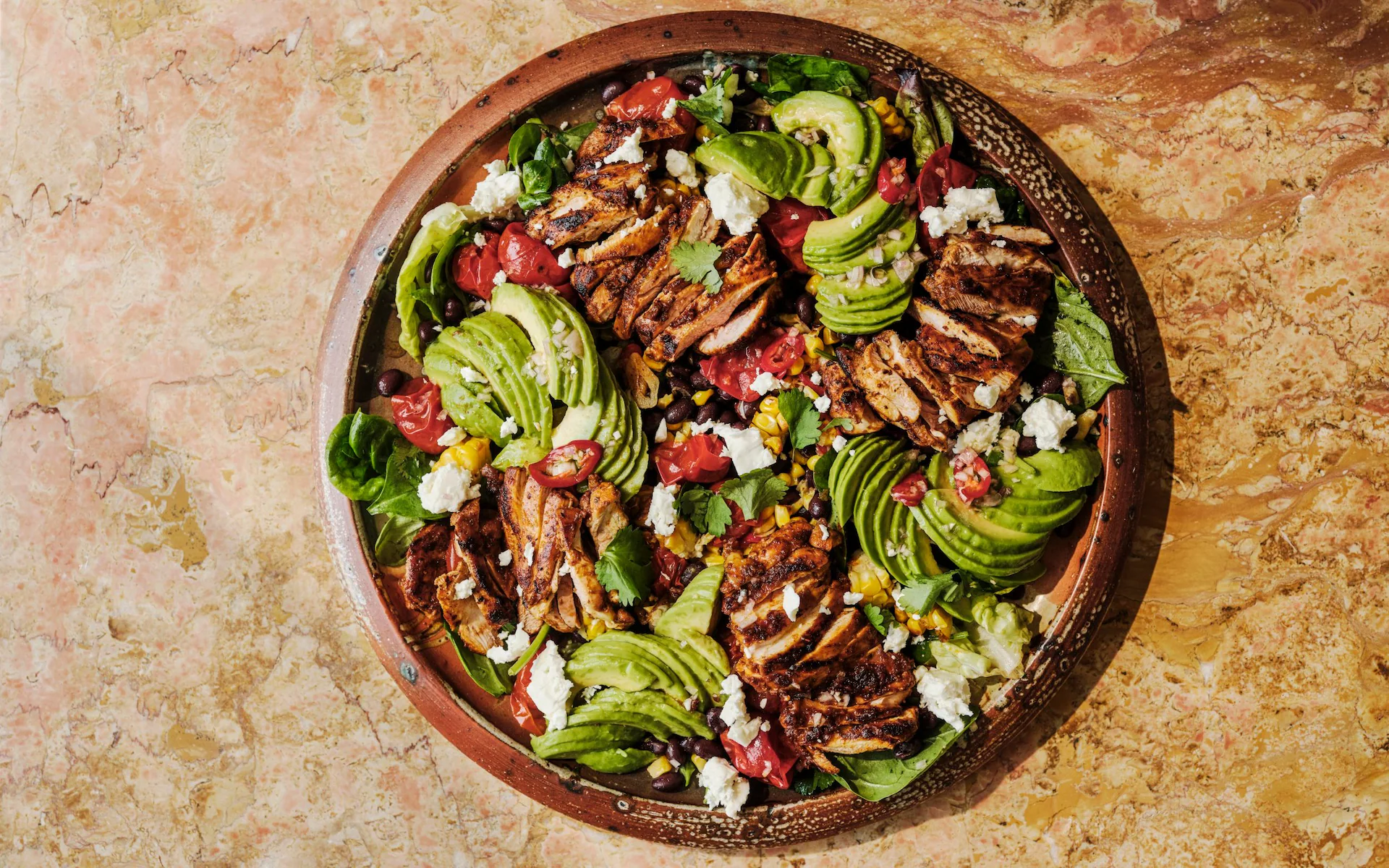
It’s possible to make a salad inspired by a substantial dish that’s usually served warm. Chipotle-flavoured chicken, black beans, roast corn and tomatoes, for example. The salad version of this can be even better than a regular main course because salads are made up of layers.
It’s not a mistake to think of salads in the way we think of braises. Braises are built up of layers of flavour too, but the goal is for the layers to meld. With a salad, the layers remain distinctive, held together by a dressing. You are the one who blends it by what you put on each forkful.
The dressing – the most important element of a salad – ensures that every part is seasoned and moist. You might even have more than one “dressing” if you incorporate buttermilk, sour cream or yogurt (perhaps drizzling them over the top before serving).
A particular ingredient can get special treatment in complex salads. The black beans in my chipotle chicken salad are left sitting with slivers of sautéed garlic, seasoning and olive oil. You haven’t cooked the beans from scratch, so you have to get as much flavour as possible into them without making a lot of effort. Beans, lentils and grains are all great at sucking up flavours.
The other things you should think about in big salads are texture, colour and contrast. Colour is an easy one, you think of it as you choose the components, but beware of only producing all-singing, all-dancing bowls of green, crimson and orange. More muted colours can also look beautiful.
Texture is easy too – the rubble of lentils, the creaminess of yogurt, the snap of beans, crispy croutons and soft leaves. And contrast is an inherent part of any salad – contrast of flavours (sour and sweet), temperature and texture.
The main downside to these substantial salads is that they can be hard to arrange. Most salads are tossed with dressing. Even when they contain lots of ingredients, one toss is enough. But often big salads need more consideration: you don’t want components to end up lost in the bottom of the salad bowl; you want a dish that feels alive, not weighed down. I use broad, shallow bowls a lot as they give you room to arrange the food.
Most of us have a basic dressing we use all the time. As long as you’ve tasted and adjusted as you’ve made it, the salad will be good, but you’re limiting your salad’s potential. Try to think about what you’re dressing – bitter leaves, toasted sweetcorn – and imagine the flavours of the components with the dressing. You don’t always get it right. The first dressing I made for the pork salad here was too sweet. I had to use more lime juice and less sugar.
There are so many flavours in your kitchen apart from olive oil, wine vinegar and Dijon mustard. There’s sesame oil, fig-leaf-infused olive oil, walnut oil and crème de cassis; gochujang, tamarind, pomegranate molasses, miso, fish sauce, citrus juice and endless herbs and spices.
Salads are one of my favourite dishes to make. They have such potential, and there are no rules. They can be anything you want them to be.