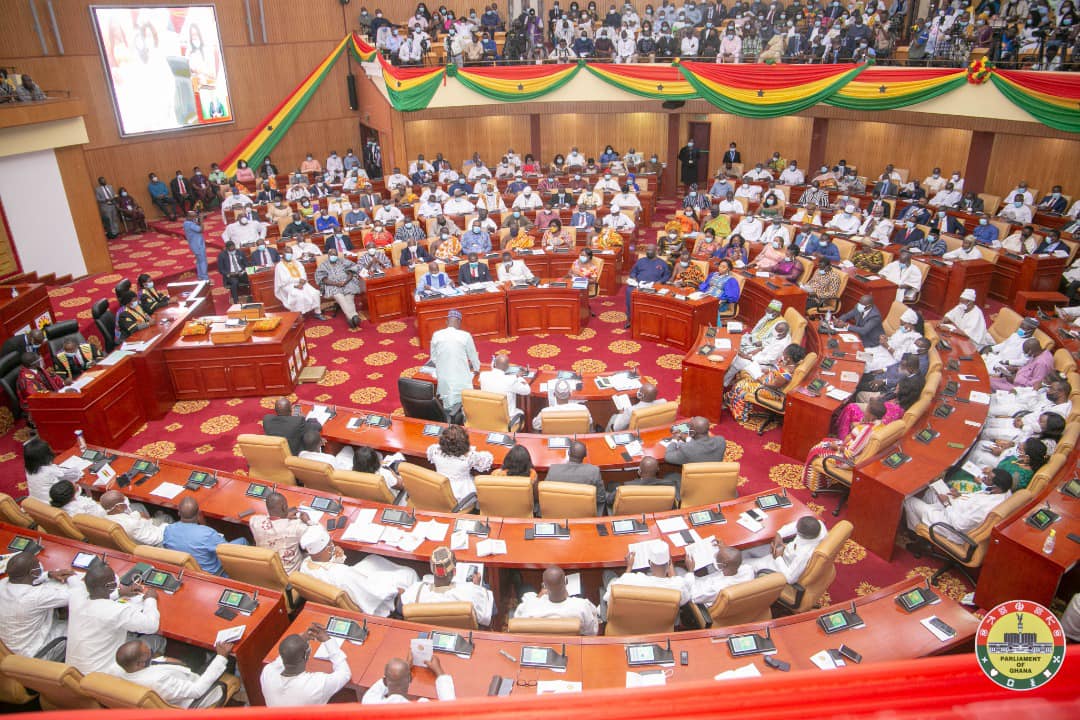
Another day, another empty side of Parliament. The cameras zoom in on vacant seats, the Speaker’s unamused gaze sweeping across the chamber, and press statements flying as journalists scramble to set up. What was once a dramatic political statement the parliamentary walkout, has now become a repetitive act in an ongoing political saga.
The actions of the New Patriotic Party (NPP) in 2025, as the Minority, raise the question: Do walkouts still have significance? And are they effective?
Walkouts are not explicitly forbidden by Ghana’s Standing Orders, nor are they formally sanctioned. Parliamentary business continues as long as a quorum is present, even if some MPs walk out. While walkouts serve as bold, symbolic protests to signal dissatisfaction, they do not halt proceedings.
A walkout occurs when MPs leave mid-session, often in protest during events like budget readings or the President’s address. Unlike a boycott, where MPs refuse to attend altogether, a walkout is an interruption during proceedings.
The 8th Parliament, beginning in 2021 with a historic 137-137 split between the NPP and NDC and one independent MP, witnessed dramatic political gestures. The NDC, during its time as the Minority, staged several high-profile walkouts, notably during the passage of the Electronic Transfer Levy (E-Levy) in 2022, which passed despite their absence.
The walkouts were meant to signal opposition, but with a split House, each absence carried weight, making their protests harder to ignore.
A New Parliament, A New Minority
The 9th Parliament has become a stage for dramatic political gestures, with the New Patriotic Party (NPP), now the Minority, and embracing protest through frequent walkouts. In 2025 alone, the NPP Minority has staged at least seven walkouts, with some hoping that by now, the party may have perfected the art of protest.
The walkouts began with protests over the passage of the Ghana Gold Board Bill, followed by the detention of Chairman Wontumi and debates on Energy Sector levies. Other walkouts occurred in response to what the NPP deemed the “insensitive” handling of the Akwatia seat’s vacancy and, most recently, the reading of the 2025 Mid-Year Budget Review. In this case, the walkout was a protest over how the violence at the Ablekuma North election re-run was handled.
However, unlike the walkouts staged by their predecessors, the NPP’s actions have had little effect on the parliamentary proceedings. The reason? Their absence no longer impacts quorum. The NDC, with its numerical dominance (187 members) and support from independent MPs, can continue business without the Minority’s presence. This makes the NPP’s walkouts more performative than persuasive, stripping them of their legislative influence.
In Ghana’s Parliament, a quorum is one-third of the total members, including the presiding officer, and decisions require at least half of the members present. Given the NDC’s strong majority, they can easily meet the quorum for both meetings and decision-making.
With a two-thirds majority, the NDC has the power to pass bills, propose constitutional amendments, and even push for a referendum. This leaves the Minority with limited influence, as their walkouts no longer disrupt or delay proceedings.
The question, then, is whether walkouts still serve as an effective form of protest. When the NDC staged walkouts, they sparked national discussions, such as over the controversial E-Levy, even though the vote didn’t go their way. For the NPP in 2025, the impact has been muted. With quorum intact, Parliament continues to function, and the walkouts often go unnoticed outside political circles and the press gallery.
What Should the NPP Minority Do Instead?
If walkouts are not working for the Minority, who can they learn from and what avenues can they use? A good example for them is the NPP Minority of 1996, which had 63 seats out of the 200 seats whereas the NDC won 131 seats as the majority.
Despite their small number, they effectively utilized their talent. The 1996 Minority included persuasive speakers, the big names we still hear today like; J.H Mensah, Nana Addo Dankwa Akufo-Addo and Yaw Osafo-Maafo, who kept the NDC majority on their toes with their arguments on the floor.
Today’s NPP has similar resources: Alexander Afenyo Markin, Patrick Boamah, Abena Osei Asare and Kojo Oppong Nkrumah among others. These voices are voices that have proven to be relevant and should be amplified and used to the fullest now. The Minority Leader must make use of the back benchers, push them to make arguments, have time to have peer to peer reviews with them until the impact is felt then the work is incomplete. The likes of Nana Agyei Baffuor Awuah, Sammi Awuku, John Darko and Laurette Korkor Asante need to be used to the fullest.
Secondly, the New Patriotic Party seems to have lost the good will of Ghanaians and it is now the role of the Minority to restore this faith in the party. The abrupt walkouts only undermine the little trust that constituents gave these MPs when they vacate their seats and in essence leave constituents with no representation in parliament.
Also, if the Minority in parliament want to put their arguments across, it is by working extensively in their respective constituencies and to champion development and engaging their constituents on their needs and national issues. It will be necessary to regain their trust rather than to lose what is left. Collaborations with Civil Society Organisations will also go a long way
Parliament is a place for debate, not empty chairs. If every grievance leads to an exit, the chamber becomes a stage for protest rather than a house of deliberation. Walkouts have their place, but they cannot become routine. At some point, voters will ask: what did you do, not how many times did you leave?