The most successful cities in history – Rome, Dubai, Singapore – were built not just on visionary planning, but on solid financial architecture. The One Square Mile must follow the same trajectory.
A compelling urban masterplan is essential, but without a credible, diversified, and disciplined funding model, even the most ambitious city can fail. Our goal is not merely to raise capital, but to build a resilient, inclusive, and future-ready ecosystem.
This smart city is not just a real estate project. It is a platform that fuses technology, education, entrepreneurship, and innovation. As such, its financing must move beyond outdated models like speculative land sales or reliance on public debt and donor grants.
Instead, it must blend public and private capital, use financial technologies, engage the Ghanaian diaspora, and develop self-sustaining revenue streams. Funding the One Square Mile is not a one-off event – it is an ongoing act of financial stewardship and innovation.
Principle One – Financial Sustainability First
At the heart of the funding model is financial sustainability. The city must generate its own revenues from inception. It cannot depend indefinitely on government subsidies or donor generosity. Operational costs, infrastructure maintenance, and future growth must be covered through service charges, operational fees, innovation hub income, and local taxes.
Lease revenues from city land will go to the One Square Mile Land Trust to fund scholarships, entrepreneurship, and social infrastructure. The governing Authority will also generate its own income.
This includes user-pays models: residents will contribute modest service charges; businesses will pay transparent licensing, regulation, and innovation hub fees. Local taxes – property rates, business levies, and event-based taxes – will anchor the revenue base. Income from smart hospitals and digital infrastructure will further support sustainability.
Operational efficiency is key. The Authority must be lean, digitally enabled, and performance-driven. Every cedi must be impactful, and every service must exceed expectations.
Principle Two – Blended financing models for resilience
A project of this scale cannot rely on a single funding source. A blended model combining government seed capital, private investment, diaspora contributions, development finance, and blockchain-enabled platforms will be employed. Government will play a catalytic role – providing land, regulations, branding, and early infrastructure to attract private capital.
Public-private partnerships (PPPs) will be key, enabling private firms to design, build, and operate major infrastructure under long-term, equitable agreements. Diaspora bonds will tap into emotional and financial ties abroad, while green bonds will attract climate-focused investment for sustainable utilities and transport.
Blockchain platforms will allow fractional ownership, enabling global investors to participate with lower thresholds. This broad-based model not only strengthens resilience but creates shared ownership, shielding the project from economic shocks and nurturing a global support network.
Principle Three – Phased funding tied to milestones
Rather than raising massive capital upfront, the city will grow through clearly defined phases, each tied to measurable outcomes. This milestone-based funding approach demonstrates discipline, reduces risk, and builds confidence among investors.
Phase One covers land preparation, utilities, roads, and branding. Upon successful delivery, Phase Two unlocks funding for energy grids and fibre networks. Phase Three focuses on the innovation hubs, smart hospital, and welcome centre. Residential and commercial development will follow, scaled according to occupancy rates and economic momentum. This strategic sequencing ensures that each phase builds credibility, attracts deeper funding, and avoids financial overextension.
Principle Four: De-risking for investors at every stage
Investors – local or international – seek not just returns but security. The One Square Mile must proactively reduce risk through legal, regulatory, and institutional safeguards. Government must provide a stable policy environment, streamlined permitting, and incentives like tax holidays and investment guarantees.
Support from development finance institutions will be essential, offering political risk insurance and credit enhancements to reassure the private sector. Legally, all land will be secured within the One Square Mile Land Trust, shielding it from speculative claims.
Governance will be professional and audited independently. Investor dashboards and blockchain-based registries will offer transparent, real-time updates on funds, progress, and outcomes. Risk mitigation will turn capital into long-term partnership, grounded in trust and reliability.
Principle Five – Long-term revenue generation for growth
The One Square Mile must fund not just its construction, but its evolution. Long-term revenue must be institutionalized through strategic leasing, taxation, commercialization of innovation hubs, and profitable green infrastructure.
Surpluses from smart utilities, public services, and urban mobility solutions will be reinvested into education, public space upgrades, and entrepreneurship. A dedicated Growth and Renewal Fund will be created, with a share of city revenues allocated annually.
This fund will support future expansions – new schools, health centers, tech labs, and sustainability projects – ensuring the city never stagnates. Great cities are not static. They must be designed to adapt, improve, and reinvent themselves for each generation.
Conclusion – Financial stewardship as a competitive advantage
The One Square Mile will not distinguish itself solely by architecture or technology. Its true edge will come from responsible, transparent, and innovative financial stewardship. Its capacity to earn investor trust, manage public resources wisely, and finance its own future will determine whether it succeeds as a model city for Africa and the world.
By pairing bold financial imagination with operational discipline, we will turn an ambitious blueprint into a thriving, self-renewing economic engine. The One Square Mile will not just be Ghana’s smartest city – it will be its most financially resilient and globally admired.
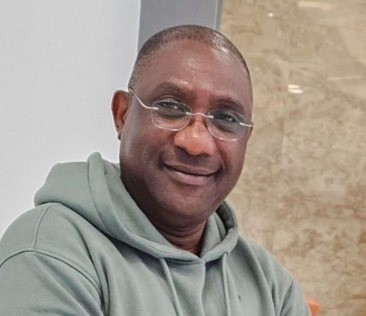
>>>the writer is a PhD researcher specializing in blockchains and decentralized finance at the University of Bradford. He holds an MBA in International Marketing and a post-graduate certificate is research from the International University of Monaco. Sammy was the first president of the Ghana Business Outsourcing Association and developed Africa’s first data entry operation and Ghana’s first medical transcription company. He can be reached via sammyomanye@gmail.com